
Key Takeaways
- Pedal assist engages the motor only when pedaling, extending battery life by using rider power, while throttle systems allow riding without pedaling at all.
- Pedal assist is best for long distances and fitness-oriented rides, offering a natural riding feel and better battery efficiency. Throttle provides instant power but reduces overall range.
- Many modern electric bikes at Crazy Lenny’s eBikes offer both throttle and pedal assist on the same bike, letting you switch between riding modes freely.
- U.S. Class 1, 2, and 3 laws determine whether your e bike can have a throttle and where you’re allowed to ride it.
- Your riding style, terrain, health goals, and local e bike regulations should guide your final decision.
Introduction: Why Pedal Assist vs Throttle Matters in 2026
Electric bikes have surged across North America over the past six years, reshaping how people commute, stay fit, and explore the outdoors. At Crazy Lenny’s eBikes, one of the first questions new shoppers ask is whether they should prioritize pedal assist, throttle, or both throttle and pedal assist on a single e bike. This article breaks down the practical, real-world differences for commuters, recreational riders, hunters, and older adults. We’ll cover ride feel, battery efficiency, legal classes, and how to choose the right e bike mode for your lifestyle-all from the perspective of North America’s largest single-location eBike retailer.
Pedal Assist Basics: How It Works and Why Riders Love It
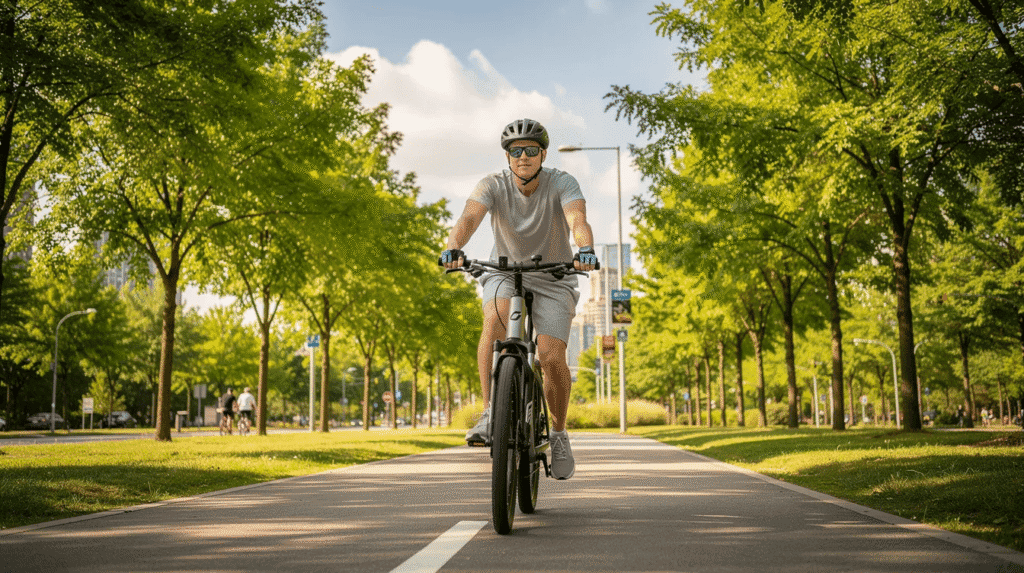
A pedal assist system adds motor assistance only when you pedal. Continuous pedaling is required to keep pedal assist activated-stop pedaling, and the motor stops too. The result is a natural biking experience with motor support that feels like a natural extension of your own pedal power.
Two sensor types drive the experience:
- A cadence sensor detects crank rotation and applies a set assist level. It’s simpler and more affordable but can feel slightly laggy at startup.
- Torque sensors measure how hard you push, responding within 10–50 milliseconds to deliver smooth power delivery proportional to your effort.
Many commuter and mid drive motors at Crazy Lenny’s use torque sensing for a refined, bike-like feel on hills and longer rides. Riders can choose from three to five pedal assist levels, dialing effort up or down depending on the route.
Pedal assist offers real advantages: more exercise, extended range per charge, and better battery efficiency for daily commuting. Pedal assist helps tackle hills more easily with motor support while still keeping your legs engaged. It also provides a natural riding experience that makes an e bike feel closer to a conventional bicycle than a motorized vehicle. Class 1 and Class 3 pedal assist e bikes are generally allowed on bike paths and multi-use trails in most U.S. jurisdictions, giving pedal assist bikes broader access.
Throttle Basics: Power on Demand, No Pedaling Required
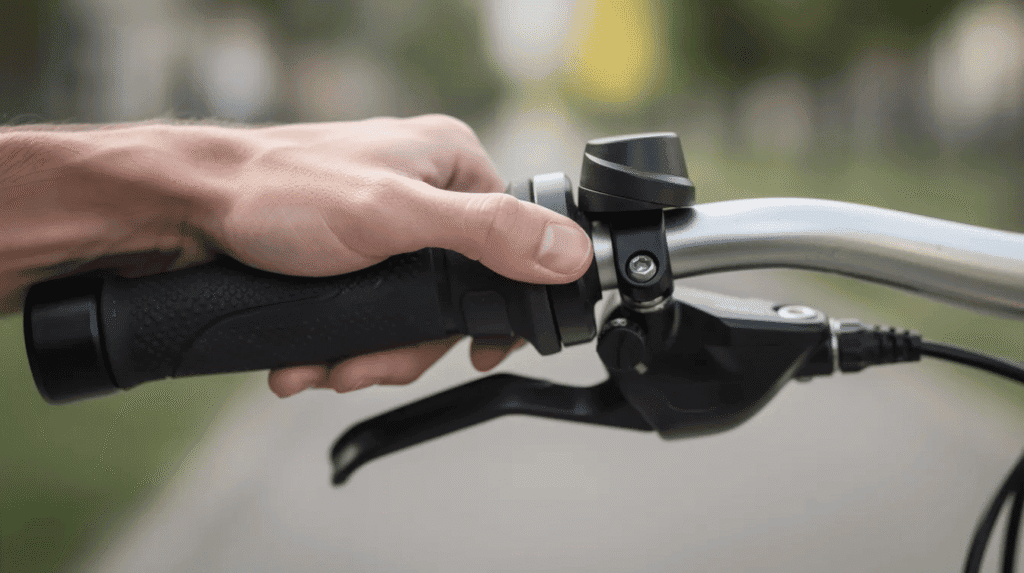
Throttle control gives you motor power through a thumb throttle, thumb lever, or twist grip-no pedaling effort required. Throttle systems allow instant acceleration without pedaling, similar to a scooter, delivering instant power whenever you engage the control.
The riding experience is defined by convenience: instant acceleration from a stop, effortless cruising on flat stretches, and easy hill climbing without breaking a sweat. Throttle e bikes provide a sweat-free commuting experience that appeals to a wide range of riders.
Common use cases we see at Crazy Lenny’s include:
- Riders with limited mobility or physical limitations who need motor assist without pedaling
- Delivery riders navigating urban stop-and-go traffic
- Cargo bikes and fat-tire e bikes starting under heavy load
In the U.S., throttle is tied to Class 2 e bikes, and throttle systems typically feature a maximum speed of 20 mph when using the throttle alone. Throttle use drains battery faster than pedal assist riding, reducing range substantially if you rely on throttle mode for the entire trip. The tradeoff is clear: throttle lets you ride without effort, but at the cost of shorter battery life.
Direct Comparison: Pedal Assist vs Throttle in Everyday Riding
Neither system is universally “better.” The pedal assist vs throttle decision comes down to what you prioritize in your riding experience.
- Ride feel: Pedal assist feels like “super legs”-your own pedaling effort amplified. Throttle feels closer to riding a light scooter.
- Hills and cargo: PAS supports steady climbing with fitness benefits. Throttle gives quick bursts and easier starts under load, making it ideal for navigating heavy traffic and quick starts.
- Fitness vs convenience: Pedal assist is ideal for fitness enthusiasts and long rides. Throttle systems are ideal for urban stop-and-go traffic and riders who want a leisurely ride.
- Different riding styles: Fitness-focused riders, commuters in Madison traffic, hunters on back roads, and older adults all lean toward different riding modes based on personal preference.
Many of Crazy Lenny’s most popular electric bikes ship with both throttle and pedal assist, letting you switch between pedal assist modes and throttle mode depending on the day and route.
Battery Life, Range, and Efficiency: Which Mode Goes Farther?
Battery life and extended range rank among the top concerns for customers, especially those commuting 10–30 miles per day.
Pedal assist extends battery life by using less power because the motor shares the workload with your legs. Throttle use generally drains battery faster because the motor handles 100% of the effort. Pedal assist typically offers a longer range per charge.
Here’s a concrete example: a 48V, 15Ah battery (about 720 Wh) on a typical commuter bike might deliver roughly 35–45 miles using mostly pedal assist in moderate levels. The same battery with heavy throttle use might return only 15–25 miles-a reduction of 30–50%.
Real-world range depends on terrain, rider weight, average speed, and wind. Some high-capacity and dual-battery models carried by Crazy Lenny’s are designed to offset the extra drain from heavy throttle use or off-road riding, giving riders battery power reserves even on demanding routes.
Legal Classes and Where You Can Ride: Class 1, 2, and 3 Explained
U.S. e bike laws commonly use a three-class system that determines whether throttle is permitted and where you can ride:
- Class 1: Pedal assist only, motor assistance up to 20 mph. No throttle. Class 1 e bikes are generally allowed on all routes, including most bike paths and multi-use trails.
- Class 2: Pedal assist and throttle, throttle capped at 20 mph. Some regions classify throttle e bikes differently than pedal-assist bikes, and throttle-equipped e-bikes may be prohibited on certain trails in the U.S.
- Class 3: Pedal assist up to 28 mph, often with speed control limiting or disabling throttle. Frequently restricted from shared paths; helmet and age requirements may apply.
Many states, including Wisconsin, recognize this system, but local e bike regulations and municipal rules can still differ. Local laws may restrict throttle use on shared paths. Throttle e bikes may face local restrictions in some areas, so riders should confirm rules before buying. Crazy Lenny’s staff routinely help customers choose compliant electric bikes for their city or state.
Choosing the Right System for Your Riding Style
The decision between pedal assist vs throttle comes down to effort level, health goals, typical distance, and local terrain.
- Fitness-focused riders: Low pedal assist levels on a regular bike route deliver a real workout with motor assist as a safety net.
- Urban commuting: Throttle systems allow for instant acceleration from a stop, perfect for city commuting and speed control in traffic.
- Campus and student riders: A mix of pedal power and throttle keeps things fast and flexible.
- Older adults and adaptive riders: Throttle e bikes can assist riders with limited mobility. Step-thru frames and eTrikes pair well with both systems.
- Cargo and utility: Heavy loads benefit from throttle for starts and pedal assist for sustained cruising with better battery efficiency.
We encourage every customer to test ride multiple models with different e bike pedal assist and throttle setups. Crazy Lenny’s offers expert consultations and an eBike Finder tool to match you to the correct combination of motor, battery, and control system.
Hybrid E-Bikes: Enjoying Both Throttle and Pedal Assist
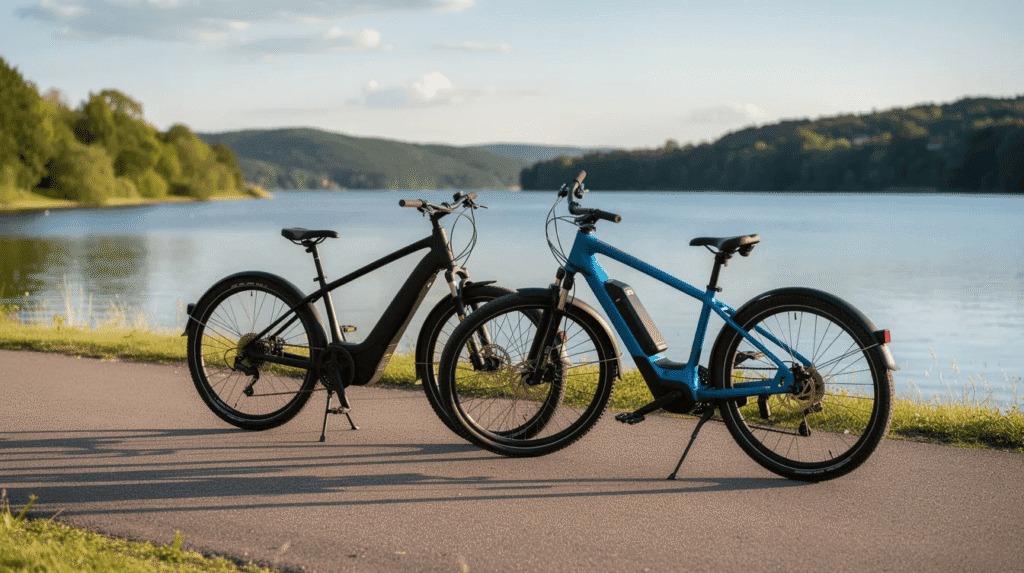
Many modern pedal assist electric bikes combine both systems on one frame, letting you choose pedal assist for efficiency and throttle for tricky moments.
A typical hybrid setup includes multiple PAS levels on the display plus a thumb or half-twist throttle that can override or complement pedal assist when needed. For example, you might use PAS Level 2–3 for most of a 15-mile commute, then pull in throttle control to cross a busy intersection or conquer a final steep hill. This flexibility accommodates different riding styles without needing two separate bikes.
Many cargo, fat tire, and step-thru models at Crazy Lenny’s ship with dual systems, making them popular for families and utility use. A common-sense tip: rely on pedal assist most of the time to protect battery life while saving throttle for short bursts, sudden acceleration recovery, or when rider input drops due to fatigue.
Crazy Lenny’s Perspective: Matching Motors, Modes, and Terrains
As North America’s largest single-location e bike retailer, Crazy Lenny’s eBikes has completed thousands of test rides and consultations. Our staff help riders choose between a rear wheel hub motor and mid drive motors, fine-tune pedal assist tuning, and select throttle options based on where they ride-Madison city streets, rural Wisconsin, or off-road terrain.
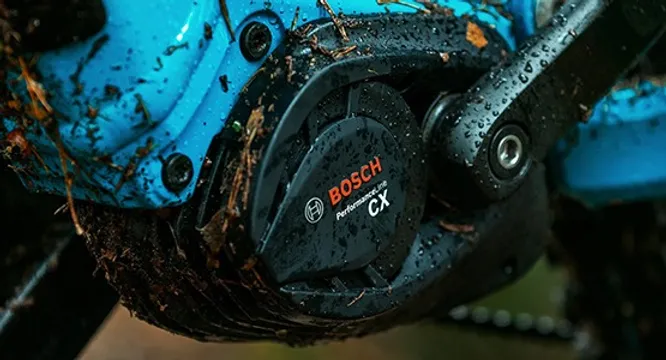
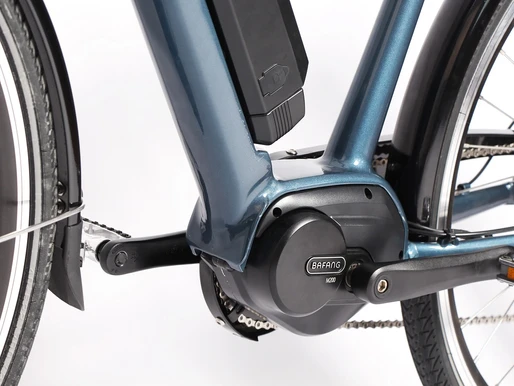
Mid drive motors with refined pedal assist are often recommended for riders prioritizing a natural riding experience, hill climbing power, and extended range. Hub motor models with strong throttle systems are popular among delivery riders, campus students, and those who value low-effort commuting and effortless cruising. Many models also feature an integrated rear rack for cargo flexibility alongside reliable brakes for safe speed control at maximum speed.
Visit us in store or call for a consultation to find the perfect e bike for your needs.
Q&A: Pedal Assist vs Throttle E-Bikes
Is pedal assist harder on your knees than throttle?
Properly set pedal assist can actually reduce knee strain compared with a conventional bicycle by letting motor assistance handle peak loads on hills and starts. Throttle removes pedaling completely, which may appeal to riders with severe joint issues-but most riders with mild concerns find low PAS levels with easy gearing perfectly comfortable. Visit Crazy Lenny’s to try a mid drive motor setup with professional saddle height adjustment for a pain-free riding experience.
Can I still get a real workout on a bike that has a throttle?
Having a throttle does not remove the ability to exercise. You can ignore the throttle entirely and rely on pedal assist or even ride with the motor off, treating it like a regular bike. Many riders at Crazy Lenny’s use PAS Level 1–2 for fitness rides, only touching the throttle for the steepest hills. Workout intensity depends on which assist level you choose and your own pedaling effort, not just the presence of a throttle.
Does using throttle all the time damage the motor or battery?
Quality electric bike systems are designed to handle regular throttle use within their rated limits. Heavy throttle use means more amp draw and more heat, which can mean shorter battery life over many charge cycles and battery drains battery faster during each ride. Staying within manufacturer speed and weight limits keeps components healthy. We recommend periodic service checks at Crazy Lenny’s to monitor battery health for riders who rely heavily on throttle mode.
Is a mid drive motor better with pedal assist than with a throttle?
Mid drive motors typically shine when paired with e bike pedal assist, leveraging the bike’s gears for efficient climbing and smooth power delivery that responds instantly to rider input. Some mid drive systems don’t include throttles at all, focusing on refined PAS. For riders who want throttle-dominant behavior, a high-quality rear hub motor is often the more straightforward option. Test both setups at Crazy Lenny’s to feel the difference across different riding modes.
What happens if my battery dies-can I still ride?
All e bikes sold by Crazy Lenny’s can be pedaled like a regular bike if the battery is empty, though they feel heavier than non-electric bikes. Pedal assist and throttle functions shut off when voltage drops below a safe limit, but mechanical brakes and gears continue working normally. Plan routes to finish with a small reserve, especially if you rely on throttle for headwinds or hills, and consider carrying a charger for longer rides.