
Wisconsin drivers are feeling it at the pump. In late April 2026, Madison’s average gas price hit $4.13 per gallon — a four-year high driven by global oil disruptions, seasonal blending costs, and surging demand. That’s more than $1 per gallon higher than this time last year, and experts say prices could keep climbing through the summer.
If you’re commuting to work by car and refilling a tank every week, that number is adding up fast. A midsize car with a 15-gallon tank at $4.13 per gallon costs over $62 per fill-up. Fill up twice a month, and you’re looking at $1,500 in fuel alone over the course of a year — and that’s before you account for parking, insurance, or maintenance.
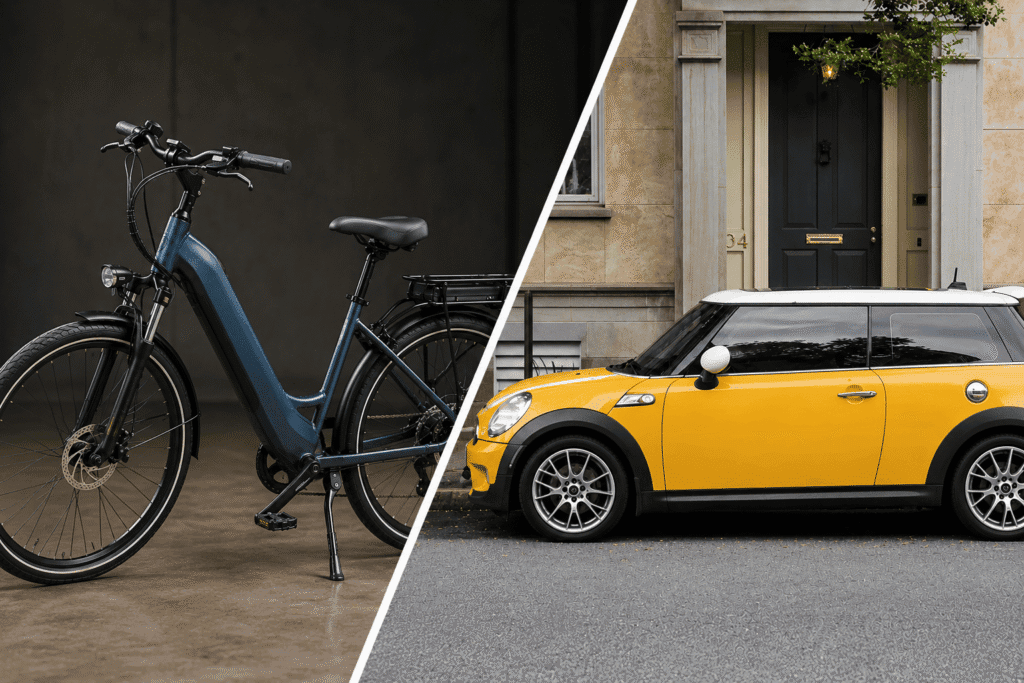
Here’s the question worth asking: what would it actually cost to commute by eBike instead? Not as a fantasy or a fitness project, but as a genuine car-replacement strategy for your Madison commute.
We’re going to lay out the real numbers. And spoiler: an eBike from Crazy Lenny’s — North America’s largest single-location eBike retailer, right here in Madison — typically pays for itself in under two years of commuting. After that, you’re riding for almost nothing.
The Real Cost of Driving Your Car to Work in Wisconsin Right Now
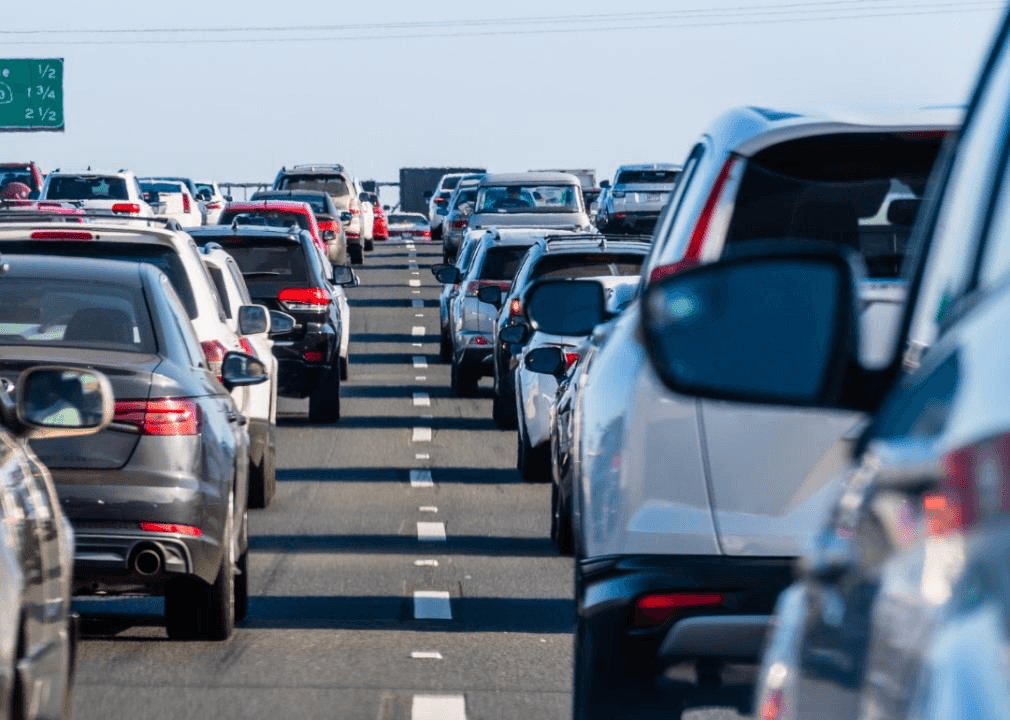
Before we talk eBike savings, let’s be honest about what driving actually costs. Most people significantly underestimate this number because they only think about the gas they pump — not everything else that comes with owning and operating a car.
Fuel Costs: $1,500–$2,500+ per Year
Based on Madison’s average gas price of $4.13 per gallon as of April 2026, a typical commuter driving 10,000 miles per year in a car averaging 28 MPG will spend about $1,475 in fuel annually. Larger vehicles, longer commutes, or lower fuel efficiency push this number well past $2,500. And with Wisconsin gas prices rising more than $1 per gallon year-over-year, that figure could be significantly higher by fall.
Parking: $600–$1,200+ Per Year
If you commute to UW’s campus, downtown Madison, or any of the major employment hubs near the Capitol, parking is not free. Monthly parking in Madison’s central areas runs $50 to $100+ per month. That’s $600 to $1,200 per year just to leave your car somewhere while you work.
Insurance: $1,200–$1,800 Per Year
The average auto insurance in Wisconsin is roughly $1,200 to $1,800 per year for a typical driver. While you’d likely keep your car even if you eBike-commute most days, every mile you replace with an eBike is a mile that keeps your insurance from increasing at renewal.
Maintenance: $500–$800 Per Year
Oil changes, tire rotations, brake pads, filters, and the inevitable surprise repairs. AAA estimates average vehicle maintenance at $0.10 per mile, which adds up to $1,000 per year for 10,000 miles. For commuting-specific costs, a realistic conservative estimate is $500 to $800 annually.
Add it up: a Madison car commuter is spending $3,800 to $6,300 per year just to drive to work — and that’s before a single car payment.
What an eBike Commute Actually Costs
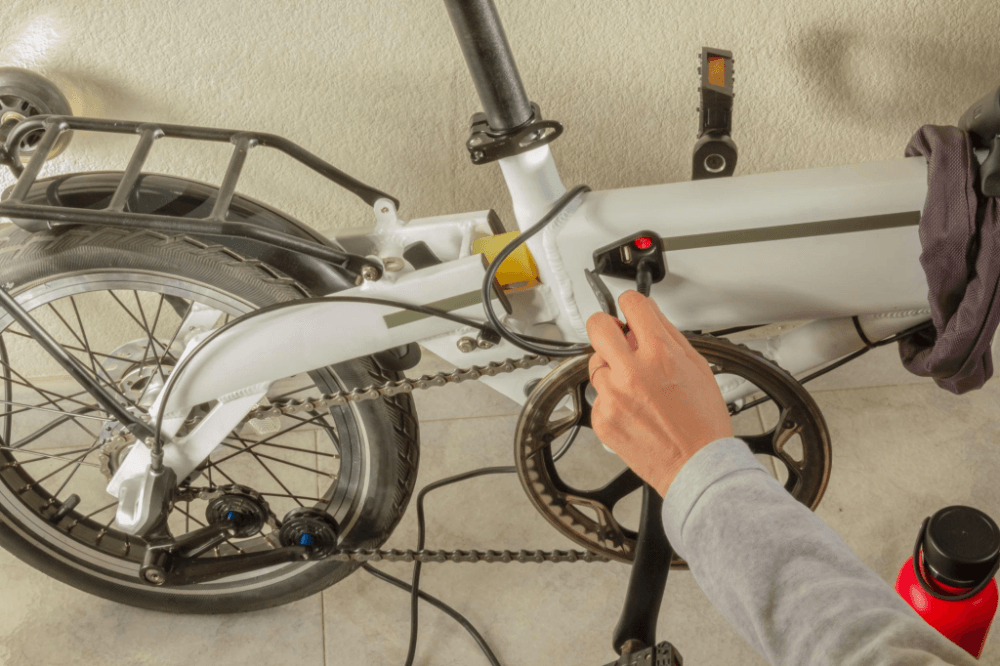
Now let’s look at the eBike side of the ledger. A quality commuter eBike from Crazy Lenny’s is a one-time purchase that costs roughly $1,200 to $2,500 for a mid-range commuter model. Here’s what you spend after that:
Charging Costs: About $25–$40 Per Year
This is where the numbers get genuinely surprising. A typical eBike battery holds 400 to 700 watt-hours (Wh) of energy. At Wisconsin’s average residential electricity rate of about $0.14 to $0.16 per kilowatt-hour, fully charging a 500Wh battery costs roughly 7 to 9 cents. That’s the energy for a 20 to 40-mile round trip.
If you charge five times per week for 50 commuting weeks a year, your total annual charging cost works out to $17 to $22. Even factoring in partial charges, longer rides, and higher-capacity batteries, you’re looking at $25 to $40 per year in electricity. That is not a typo.
Compare that to $1,475+ in gasoline. An eBike commute costs roughly 1.5 to 2.5 percent of what a car commute costs in fuel alone.
Maintenance: $100–$150 Per Year
eBike maintenance is simple: chain lubrication, brake pad checks, tire pressure, and an annual tune-up. A full service at Crazy Lenny’s Service Center covers the essentials. Budget $100 to $150 per year for parts and service, and you’re being conservative.
Accessories: One-Time Cost
A quality lock ($40–80), a helmet if you need one ($50–150), fenders and lights if not already integrated, and panniers or a rack bag for cargo. One-time costs, mostly in year one.
Year-Round Savings at a Glance: Car vs. eBike Commute
Here’s a side-by-side annual comparison for a typical Madison commuter:
| Expense | Car (Annual) | eBike (Annual) |
| Fuel / Charging | ~$2,080+ | ~$25–40 |
| Insurance | ~$1,200–1,800 | $0 (or minimal) |
| Parking (Madison) | ~$600–1,200+ | $0 |
| Maintenance | ~$500–800 | ~$100–150 |
| Annual Total | ~$4,380–5,880 | ~$125–190 |
The annual savings potential of switching your commute to an eBike: $4,000 to $5,700 per year. A $1,500 commuter eBike pays for itself in less than five months.
But Wait — Can You Really Commute by eBike Year-Round in Wisconsin?
This is the question we hear most often from customers who are intrigued but skeptical. Wisconsin winter is real. Madison gets snow. So, how practical is year-round eBike commuting?
The honest answer: Year-round commuting is possible for many Madison riders, and the eBike makes it more accessible than a regular bike.
Fall: September Through November — The Sweet Spot
Fall in Madison is arguably perfect for eBike commuting. Mild temperatures, low humidity, and some of the most beautiful riding conditions of the year. The Capital City Trail and Southwest Commuter Path are particularly stunning in October. If you start your eBike commute in the fall, you’ll wonder why you ever drove.
Winter: December Through February — For the Committed
Winter riding is not for everyone, but it’s far more common in Madison than most people expect. Fat tire eBikes are specifically designed for winter riding — wide tires that float over snow and provide traction on ice. Our fat tire customers commute through Wisconsin winters regularly, and they’ll tell you it’s genuinely fun.
For riders who prefer to park the eBike in December, the savings from 9 months of car-free commuting are still substantial. Running the numbers on a September-through-May eBike season (roughly 38 commuting weeks) still produces $3,000+ in annual savings.
Spring: March Through May — The Easiest Entry Point
Spring is when most new eBike commuters take the plunge, and it’s a great time to start. Temperatures warm up, the paths are clear, and you’re riding through Madison in bloom. Spring is also Crazy Lenny’s busiest buying season — inventory moves fast. If you’re thinking about getting started before summer, now is the time.
Summer: June Through August — The Easiest Season
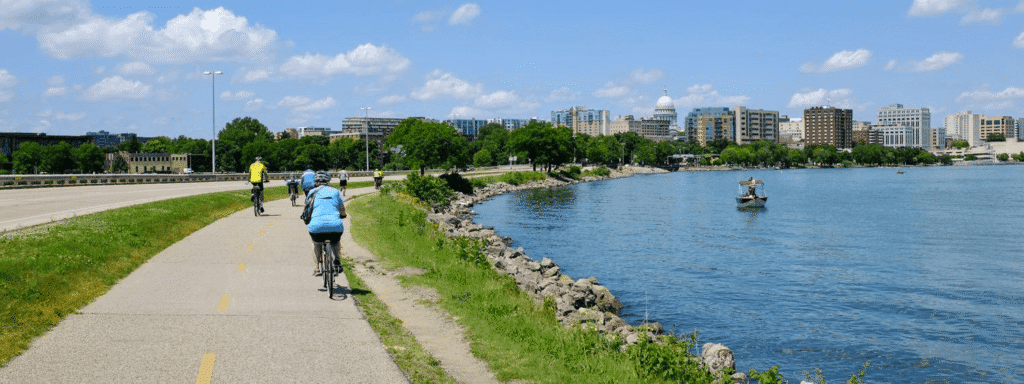
Summer commuting by eBike in Madison is simply enjoyable. The morning ride is cool enough, the paths are in great shape, and you arrive at work having experienced something the drivers sitting in construction traffic will never get. Plus, no parking hassles during the busy summer season downtown.
How Fast Does a Commuter eBike Pay for Itself?
Let’s run a simple break-even calculation for a common scenario: a Madison professional who commutes 8 miles each way, five days a week.
• Annual fuel cost replaced: approximately $800 to $1,200 (8-mile commute at 28 MPG, $4.13/gallon)
• Annual parking replaced: $600 to $900 (modest estimate for west-side commute)
• eBike purchase cost: $1,500 for a solid mid-range commuter
• Annual eBike operating cost: $125 to $175
Net annual savings in year one: $1,225 to $1,925. Break-even point: 9 to 15 months. After that, you’re banking the full savings every year.
For commuters with longer drives, paid parking, or less fuel-efficient vehicles, the payback is even faster.

Frequently Asked Questions
How much does it cost to charge an eBike in Wisconsin?
Charging an eBike in Wisconsin costs approximately 7 to 9 cents per full charge, based on the state’s average residential electricity rate of $0.14 to $0.16 per kilowatt-hour and a typical 500Wh battery. A full year of daily commute charging — five days per week for 50 weeks — costs roughly $25 to $40 in electricity. This is the most dramatic cost difference between eBike commuting and driving: what costs $1,500+ in gasoline costs under $40 to do by eBike.
How much money can I save by commuting by eBike instead of driving in Madison?
A typical Madison commuter switching from a car to an eBike for their daily commute can save $4,000 to $5,700 per year when accounting for fuel, parking, maintenance, and insurance costs. For a commuter spending $4.13 per gallon on gas, the fuel savings alone typically cover the cost of a mid-range commuter eBike within 9 to 15 months.
Can you commute by eBike year-round in Wisconsin?
Yes, year-round eBike commuting is practical in Wisconsin, though the approach changes by season. Spring through fall offers ideal conditions. For winter commuting, fat tire eBikes with wide, grippy tires handle snow and ice effectively and are popular among dedicated year-round riders in Madison. Riders who commute by eBike for even 9 months of the year (skipping the coldest winter months) still capture the majority of the annual savings compared to driving.
How does eBike charging cost compare to gas in 2026?
In 2026, Wisconsin gas prices have risen above $4 per gallon — a four-year high. Charging an eBike on Wisconsin electricity costs the equivalent of approximately $0.25 to $0.35 per gallon equivalent, making eBike commuting 12 to 16 times cheaper per mile than driving a typical gasoline vehicle. As gas prices continue to rise, the cost advantage of eBike commuting grows proportionally.
How many miles can a commuter eBike travel on a single charge?
Most commuter eBikes have a real-world range of 30 to 60 miles per charge, depending on the battery size, level of pedal assist used, terrain, and rider weight. For most Madison commutes — which average 6 to 12 miles each way — a single charge covers multiple round-trip. Many riders charge their bike once every two to three days during a typical commuting week, further reducing the already-minimal charging cost.
What eBike is best for commuting in Madison, Wisconsin, year-round?
The best commuter eBike for Madison depends on your route and the seasons you’ll ride. For three-season commuting, a commuter eBike with integrated lights, fenders, and rack mounts is the practical choice. For year-round commuting, including winter, a fat tire eBike offers the traction and stability needed for snowy Madison roads. A free consultation at Crazy Lenny’s is the fastest way to identify the right fit for your specific commute.
How quickly does a commuter eBike pay for itself?
For a typical Madison commuter, a mid-range commuter eBike in the $1,200 to $2,000 range pays for itself in 9 to 18 months, depending on commute distance, parking costs, and how often it replaces car trips. After the break-even point, the ongoing cost of eBike commuting is roughly $125 to $175 per year — compared to $3,800 to $6,300 per year for a car commute. Over five years, the total savings typically reach $8,000 to $12,000.
Does Crazy Lenny’s offer eBikes for commuters in Madison, Wisconsin?
Yes. Crazy Lenny’s eBikes is located at 6017 Odana Road in Madison and stocks a large selection of commuter eBikes across all price points. As North America’s largest single-location eBike retailer, Crazy Lenny’s also offers a free eBike consultation, dem,o and used bikes at reduced prices, and rental options for riders who want to test before buying. The team specializes in matching each customer with the right bike for their specific commute — not just the most expensive option on the floor.