
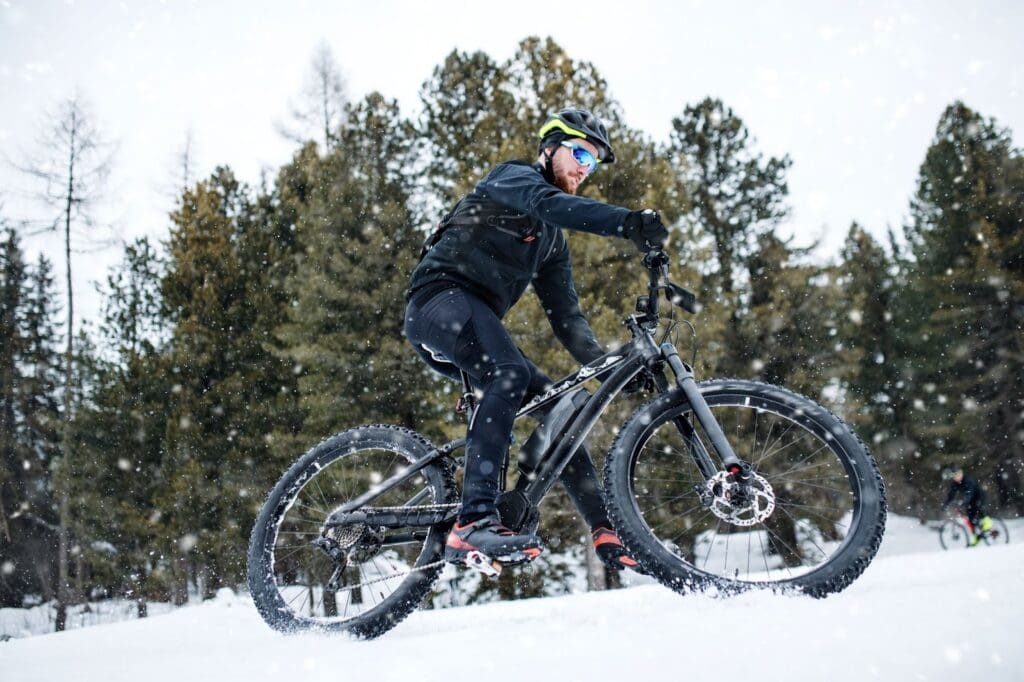
Madison doesn’t slow down when the snow starts falling. From frozen lakes to active bike paths, the city offers numerous opportunities to stay active outdoors during the colder months. For many riders, winter e-biking in Madison has become a practical and enjoyable way to get around, explore town, and stay active even when temperatures drop.
With the right preparation, winter riding on an e-bike can be safe, fun, and surprisingly comfortable. This guide covers the best winter activities in Madison and shares proven tips to help you ride confidently through cold weather, snow, and ice.
Introduction to Winter Riding
Winter riding in Madison transforms the city into a playground for those willing to embrace the cold. While snowy conditions and slippery surfaces might seem daunting at first, winter riding can be both fun and enjoyable with the right preparation. Riding an e-bike during the winter months means you’ll need to pay extra attention to safety, gear, and the unique challenges that come with cold weather.
To stay safe and warm, it’s essential to equip your bike with studded tires for better traction, use good lights to improve visibility, and wear warm gloves to protect your hands from the chill. Dressing in layers helps you regulate your body temperature and stay comfortable throughout your ride. Don’t forget to protect your e-bike battery from extreme cold by storing it indoors when not in use. With the right approach, winter riding becomes a rewarding way to commute, explore, and enjoy Madison’s many paths—even when the temperature drops. Whether you’re heading out for a quick ride or a longer adventure, a little planning and the right gear will keep your winter cycling experience safe, warm, and full of fun.
Why Winter E-Biking in Madison Works
Madison is one of the most bike-friendly cities in the Midwest, even during winter. Many bike paths and shared-use paths are regularly plowed, making winter cycling possible throughout the winter months. An e-bike, or electric bike, helps riders maintain steady momentum, reduce fatigue, and stay warm without working too hard—even in cold weather. Electric bikes perform well, though riders should be mindful of battery performance in low temperatures.
Unlike a car, an e-bike allows you to avoid traffic, enjoy fresh air, and adapt more easily to changing road conditions. It’s important to plan for winter riding, such as mapping your route in advance and having a contingency plan in case weather conditions worsen and it becomes unsafe to continue. For commuting or short trips across town, winter e-biking in Madison is often faster and more enjoyable than driving.
Choosing the Right E-Bike’

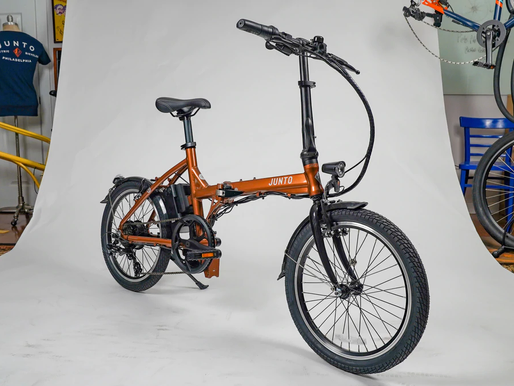
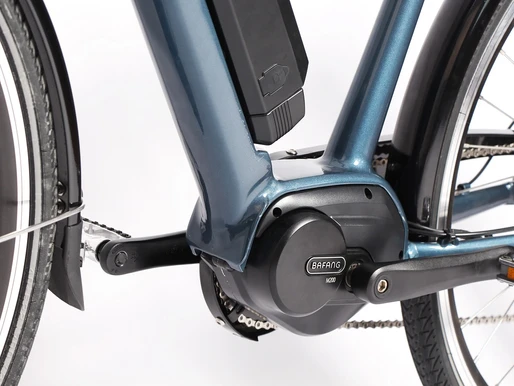
Selecting the right e-bike is the foundation of a successful winter cycling season. For winter riding, look for an e-bike with a removable battery so you can easily bring it inside and protect it from the cold. Flat pedals are a smart choice, offering better grip for boots and making it easier to keep your balance on slippery surfaces. Studded tires or winter-specific tires provide the traction you need to confidently navigate snowy conditions and icy bike paths.
When it comes to gear, prioritize a helmet for safety, warm gloves for comfort, and merino wool base layers to keep you dry and warm. Good lighting is essential for visibility during shorter days and in low-light conditions. Make sure your e-bike has a reliable braking system to handle wet or icy roads, and consider the types of paths and trails you’ll be riding—choose a model that’s built for the terrain you expect to encounter.
By investing in the right e-bike and winter cycling gear, you’ll be ready to tackle Madison’s winter months with confidence. The right setup not only keeps you safe and warm but also makes every ride more enjoyable, no matter what the weather brings.
Top Winter Activities You Can Reach by E-Bike
Explore Madison’s Winter Bike Paths and Trails
Madison maintains a strong network of paths and trails that remain accessible during winter. Riding along familiar bike paths helps reduce surprises from slippery surfaces, especially when snow or ice is present.
Using studded tires or winter-rated tires greatly improves traction and control, particularly on black ice or packed snow. Many riders find that winter riding on trails is quieter and more peaceful than during warmer seasons.
Visit Coffee Shops, Breweries, and Local Spots
Cold rides pair perfectly with warm destinations. An e-bike makes it easy to commute to local coffee shops, breweries, and events without worrying about parking or icy sidewalks.
Short trips through winter weather feel easier with pedal assist, especially when bundled in layers. Riders often report that winter e-biking in Madison turns everyday errands into genuinely fun outings.
Winter Commuting Without the Stress
For those who commute year-round, winter cycling offers a reliable alternative to driving. Snow-covered streets can slow cars, but an e-bike remains nimble on plowed paths and side streets.
With proper lights, reflective elements, and careful planning, winter commuting can be safe and efficient—even during early mornings or night rides.
How Cold Weather Affects Your E-Bike
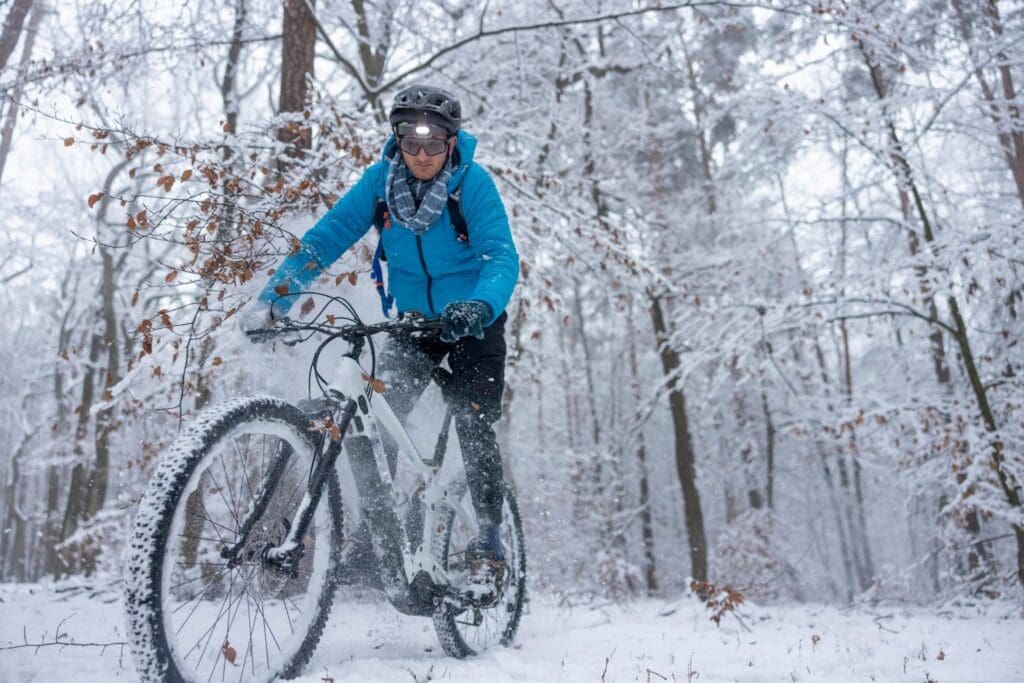
Battery Performance in Winter
Cold weather reduces battery efficiency, so reduced range is normal. An e-bike battery performs best when kept warm.
Key tips:
- Store the battery indoors when not riding
- Bring the battery inside overnight
- Avoid charging batteries immediately after a ride in extreme cold
Keeping batteries at a stable temperature helps preserve range and long-term performance.
Range and Power Expectations
Expect a slightly shorter range during winter riding. Snow, ice, and heavier clothing all contribute to increased energy use. Planning shorter routes and charging more frequently helps keep rides enjoyable.
Essential Gear for Winter E-Biking
Having the right gear makes all the difference during winter cycling. Insulated riding pants are essential for warmth and comfort, helping you stay protected from the cold on longer rides.
Here’s a quick checklist of must-have winter e-biking gear in Madison:
- Waterproof, insulated jacket
- Insulated riding pants
- Thermal base layers
- Warm gloves (add hand warmers inside gloves for extra warmth in extreme cold)
- Helmet or helmet liner (cover your head with a thermal cap or hat under your helmet to protect from cold and wind)
- Wool socks
- Waterproof boots
- Reflective gear for visibility
Clothing and Warmth
Dress in layers to regulate warmth:
- Base layers for insulation
- Wind-resistant outerwear
- Warm gloves, wool socks, or merino wool layers
- Insulated helmet liner or winter helmet
Avoid overdressing to prevent excess sweat, which can lead to chills later in the ride.
Visibility and Safety Gear
Winter days are shorter, and visibility can be poor during snow or rain. Equip your bike with:
- Good lights front and rear
- Reflective strips on clothing or bags
- A properly fitted helmet
These steps help you stay safe in traffic and low-light conditions.
Winter Riding Tips for Snow and Ice
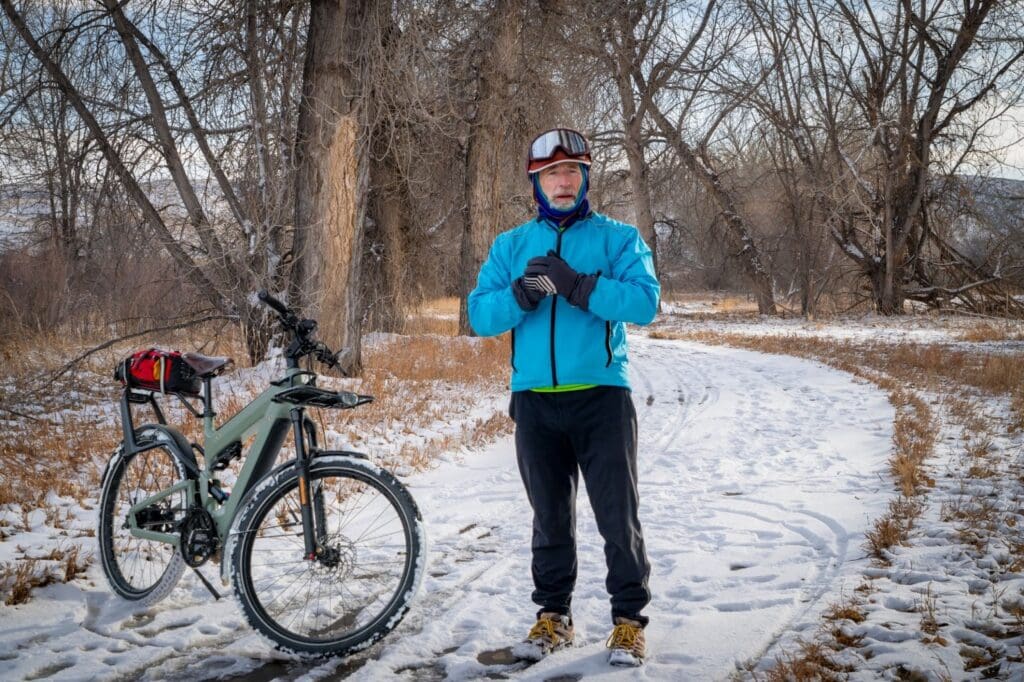
Successful winter riding is about riding smart, not fast.
Helpful tips:
- Ride slower and brake earlier
- Watch for road salt, wet patches, and ice
- Be cautious on bridges and shaded areas
- Keep tires properly inflated for cold conditions
Using wider tires and maintaining steady pedal input improves traction on snowy or icy surfaces.
Bike Care During Winter Months
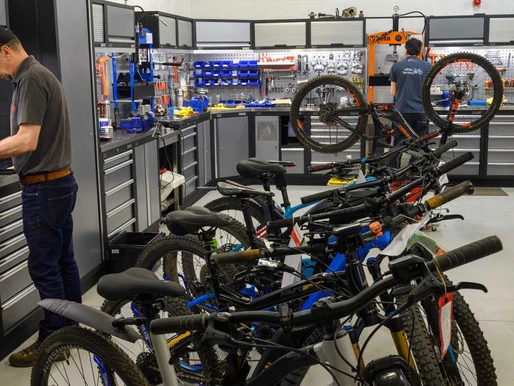
Cleaning and maintaining your bicycle is essential during winter to remove debris and prevent rust from moisture, snow, and salt.
To protect your bike:
- Wipe it down after rides. Cleaning your e-bike after each ride in winter helps to remove debris and prevent rust.
- Pay attention to brakes and drivetrain
- Store your bike in a dry space when possible
Regular care keeps your bike running smoothly throughout the season.
Making Winter E-Biking Enjoyable
Winter e-biking in Madison isn’t just practical—it can be genuinely enjoyable. With fewer riders on the trails, crisp air, and quiet paths, winter riding offers a different perspective on the city.
Many riders find that winter cycling improves mood, builds confidence, and helps them stay active when it’s easy to fall into a sedentary routine.
Final Thoughts: Embrace Winter on Two Wheels
Winter doesn’t have to end your riding season. With proper planning, the right clothing, and attention to battery care, winter e-biking in Madison can be safe, comfortable, and fun.
From snowy trails to daily commutes, an e-bike opens the door to year-round cycling—even in cold, icy conditions. Dress smart, ride carefully, and enjoy everything Madison has to offer this winter.

FAQ: Winter E-Biking in Madison
1. Will my e-bike battery work in cold weather?
Yes, but cold weather does reduce battery efficiency and range. E-bike batteries perform best when kept warm, so store your battery indoors overnight and bring it inside when not riding. Avoid charging the battery immediately after riding in extreme cold—let it warm up to room temperature first. With proper care, your battery will continue to work throughout winter, though you should expect slightly shorter range and plan for more frequent charging on longer rides.
2. What gear do I absolutely need for winter e-biking in Madison?
Essential gear includes studded tires or winter-specific tires for traction on snow and ice, warm gloves, insulated riding pants, thermal base layers, waterproof boots, and wool socks. You’ll also need good front and rear lights for visibility during shorter winter days, reflective gear for safety, and a properly fitted helmet with a thermal liner or cap underneath. Dress in layers so you can regulate warmth without overheating—avoid overdressing, as excess sweat can lead to chills later in your ride.
3. Is it safe to ride an e-bike on snowy and icy paths?
Yes, with the right precautions. Madison maintains many plowed bike paths and shared-use paths throughout winter, making winter cycling accessible. Use studded tires for better traction, ride slower than usual, brake earlier, and watch for black ice, wet patches, and road salt. Be especially cautious on bridges and shaded areas where ice forms more easily. Keep your tires properly inflated for cold conditions, and remember that wider tires improve traction on snowy or icy surfaces. Winter riding is about riding smart, not fast.
4. How does winter e-biking compare to driving or taking a regular bike?
Winter e-biking often beats driving for short trips across Madison. While snow-covered streets can slow cars, an e-bike remains nimble on plowed paths and side streets, helping you avoid traffic and parking hassles. Compared to a regular bike, an e-bike helps you maintain steady momentum with less physical effort, keeping you warmer without overworking or sweating. The pedal assist is especially helpful when bundled in heavy winter layers, making commutes and errands faster and more comfortable than traditional cycling in cold weather.
5. Can I really enjoy winter e-biking in Madison, or is it just about survival?
Winter e-biking in Madison can be genuinely enjoyable, not just practical. With fewer riders on the trails, crisp air, and quiet paths, winter riding offers a peaceful perspective on the city. Many riders find that winter cycling improves mood, builds confidence, and helps them stay active during months when it’s easy to become sedentary. Short trips to coffee shops and breweries become fun adventures rather than chores. With proper planning, the right clothing, and attention to battery care, winter e-biking transforms from a challenge into a rewarding year-round activity.