

Your electric bike is part vehicle, part investment. Knowing the right ebike maintenance frequency keeps it safe, efficient, and out of the repair shop for problems that could have been caught early. This guide breaks down exactly what to check, when to check it, and when to hand the job to a professional.
Key Takeaways
This guide answers “how often should I service my e-bike?” with clear, tiered intervals based on how you actually ride.
- Most casual riders need a professional basic tune-up about once a year or every 1,500 miles. Daily commuters in Madison-style weather should plan every 4 to 6 months.
- Do a quick pre-ride safety check every time you ride (tire pressure, brakes, lights, battery charge) and a deeper at-home bike maintenance check each month.
- Regular maintenance prevents excessive wear on key components like brake pads, the drivetrain, and the e-bike battery, protecting both battery range and ride safety. Routine checks extend the life of these components by catching small problems before they cascade.
- Crazy Lenny’s eBikes’ in-house service center services all e-bike brands and can build a custom maintenance schedule based on how and where you ride.
- If you’re unsure where your bike stands, use this article as an annual checklist and schedule a visit if anything feels off.
How Often Should You Service Your E-Bike?
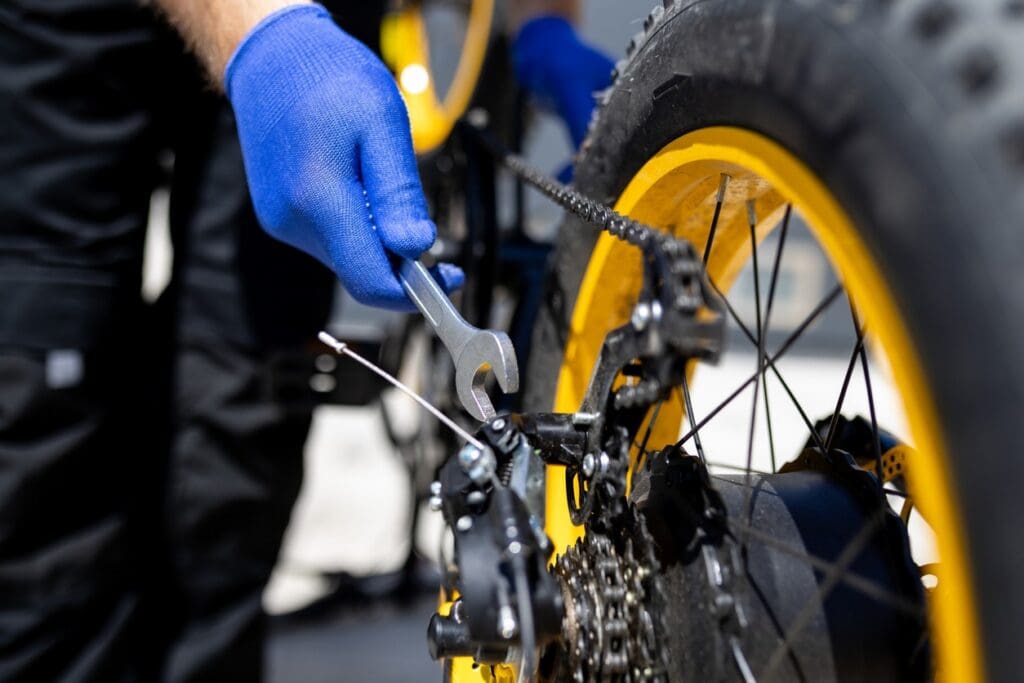
E-bikes require more frequent maintenance than a regular bike due to their weight, motor torque, and higher average speeds. Here are the intervals Crazy Lenny’s technicians recommend, drawn from years of hands-on work with commuters, casual riders, and off-road riders across Wisconsin.
If you ride two to three times a week in good weather and stick to flat terrain or paved paths, plan for one professional tune-up per year. If you commute daily and rack up 100 to 200 miles per month through rain, road grit, and winter salt, schedule professional service every 4 to 6 months. If you ride rough terrain, hunt from your e-bike, or push through snow and mud, bring it in every 3 to 4 months during the riding season.
A more granular breakdown: perform a basic tune-up every 6 months or 500 to 700 miles, and service your e-bike every 3 to 4 months or 1,000 miles if you ride hard. Schedule professional tune-ups every 1,500 miles for a full inspection. Annual service is recommended for e-bikes used frequently, even if mileage is low. E-bike maintenance costs average $200 to $300 annually, a fraction of what neglected repairs end up costing.
New e-bikes benefit from an initial break-in tune at roughly 100 to 200 miles. During this visit, a tech will re-tension spokes, re-check bolts, and adjust shifting as cables stretch under initial use. Skipping this step leaves you riding with loose axle nuts, a sloppy derailleur, and spokes that may loosen your wheels within weeks.
One-size-fits-all frequency doesn’t work. A rider who only saddles up May through September faces different wear patterns than a year-round commuter battling Wisconsin’s salty roads. The sections below help you find your own ebike maintenance schedule.
Before Every Ride: Quick Safety & Range Check
This takes 60 to 90 seconds. Build it into your routine like putting on a helmet.
- Brakes: Squeeze both brake levers. You want firm, even resistance. If either lever pulls halfway to the handlebars or feels soft, your brake pads may be worn, or your hydraulic system may need attention. Soft brakes are a stop-riding-now signal. Inspect brake pads for wear before every ride.
- Tires: Check tire pressure with a gauge or at least squeeze the sidewall. Underinflated tires reduce battery range, increase the risk, and make handling sluggish. Inflate to the recommended psi printed on the tire sidewall. Inspect tires for deep cuts or excessive wear each time you look.
- Battery: Confirm the bike battery is properly locked in, the display powers on, and you have sufficient charge for the planned route plus a buffer for headwinds and hills.
- Visual scan: Look for loose or misaligned parts: handlebar alignment, saddle, wheels fully seated, front wheel facing straight. This is especially important after transporting the bike on a car rack, where axle nuts and quick-release levers can shift.

Weekly to Monthly: At-Home E-Bike Maintenance Checklist
Every few weeks, or roughly every 100 to 150 miles, spend 15 to 20 minutes on these at-home checks. This practical checklist covers the tasks that prevent small issues from becoming expensive repairs.
- Drivetrain care: Your drivetrain includes the chain, cassette (rear gears), chainring(s), and derailleur (the mechanism that moves the chain between gears). Wipe the chain clean, then apply a bike-specific lubricant. Lubricate the chain after cleaning; never ride on a dry or squeaky chain, as squeaky chains indicate a need for cleaning and lubrication. Wipe away excess lube so it doesn’t attract grit. Chain maintenance involves cleaning and lubrication every few weeks. Check that shifting feels smooth; if it hesitates or clicks, note it.
- Brake pads: Inspect brake pads monthly for wear. Look for the wear indicator lines molded into the pad surface. If the pad material is thin or you hear scraping or squealing during braking, replacement is close. Brake pad wear is critical to inspect monthly, especially on e-bikes.
- Bolts and fasteners: Inspect bolts and fasteners regularly due to e-bike vibrations. Check the stem, handlebars, seatpost, racks, and fenders. Tighten bolts after rough terrain rides. A small torque wrench prevents over-tightening.
- Cleaning: Wipe dust, road salt, or mud from the frame, wheels, motor area, and battery contacts using a damp cloth. Regular cleaning prevents corrosion from dusty conditions and winter grime. Deep cleaning is recommended monthly to maintain overall bike health. Never use a pressure washer; high-pressure water forces moisture into bearings, the electrical system, and sealed motor housings.
- Log issues: Note anything that feels off: slower shifting, unusual noises, reduced battery range, wobble in wheels. These notes help Crazy Lenny’s technicians diagnose problems faster during your next visit.
Annual (or Semi-Annual) Professional Tune-Up at Crazy Lenny’s
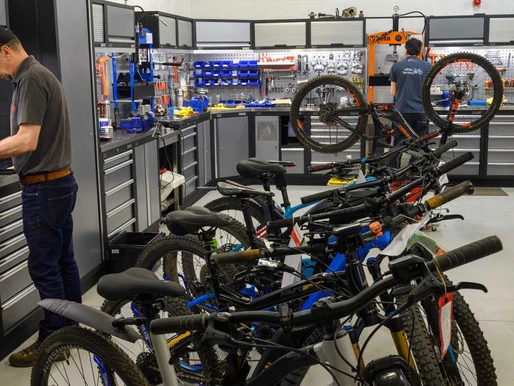
A professional tune-up includes a full inspection of critical components that go beyond what most riders can assess at home. Here is what a visit to Crazy Lenny’s service center typically covers.
Mechanical checks: Full safety inspection of frame and fork, true wheels and spoke tension, brake adjustment or hydraulic brake bleed (the process of removing air bubbles from sealed brake fluid lines), shifting and derailleur adjustment, chain and cassette wear measurement, and bolt torque verification across the crank arm, bottom bracket, stem, and other components. Check hydraulic brake systems annually for fluid replacement needs. Technicians also inspect derailleur pulleys, wheel hubs, and bearings in the headset and bottom bracket, recommending replacement only when wear demands it.
E-bike-specific diagnostics: Battery testing, motor error code scan, firmware updates (firmware updates may be necessary for e-bike motors and displays), and inspection of electrical connectors and cables for corrosion or damage. This applies whether you have a mid-drive motor or one of the common hub drive motors.
Basic e-bike tune-ups cost around $100 to $200. Labor rates for e-bike repairs range from $135 to $165 per hour. A comprehensive e-bike tune-up, including deeper drivetrain work and full motor and battery diagnostics, can exceed $300.
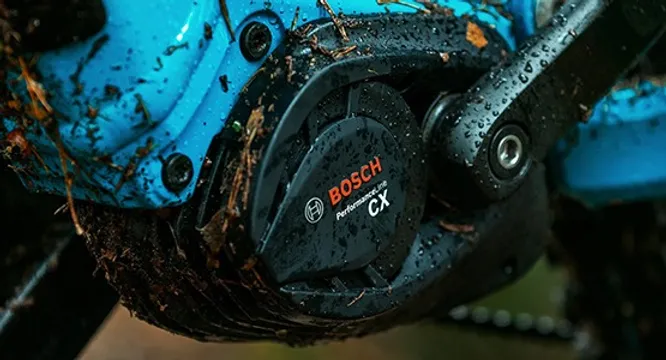
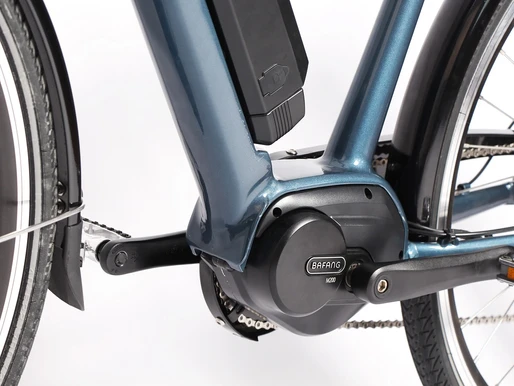
Crazy Lenny’s is North America’s largest single-location e-bike retailer, with in-house techs trained on Bosch, Bafang, Shimano, and other major systems. That depth of experience makes it a stronger choice than a general bike shop that only occasionally works on e-bikes. Riders can stop in without an appointment for many services, and the team can propose a tailored electric bike service interval based on rider type.
E-Bike Battery Care & Maintenance Frequency
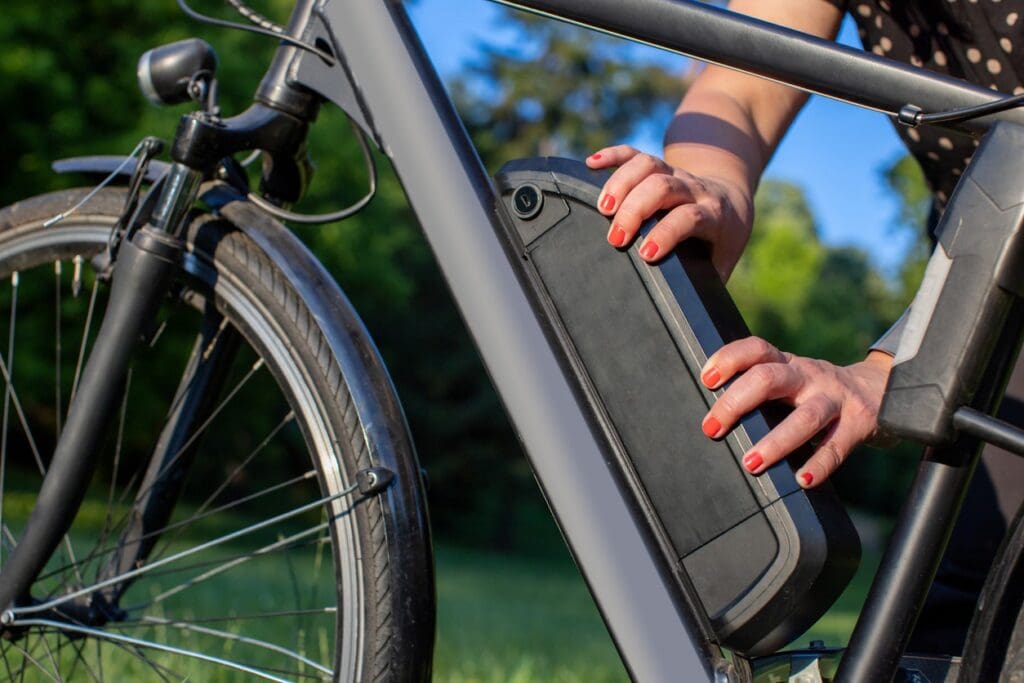
Replacing an electric bike battery costs between $500 and $800, making consistent battery care one of the highest-return habits you can build. Lithium-ion batteries degrade faster with poor charging habits and temperature extremes.
- Charging pattern: Charge your e-bike battery regularly, but avoid leaving it at 100% for weeks. Recharge batteries regularly if the bike sits unused. A practical routine: charge to full before longer rides, and store the battery around 30% to 60% charge if the bike will sit for more than a week.
- Connector check: Battery maintenance includes checking connections and ensuring secure locking. Monthly, examine battery terminals and main power plugs for moisture, corrosion, or looseness. Check battery connections for wear and corrosion regularly. Keep them clean and dry.
- Temperature: Batteries should be stored in cool, dry places to extend their lifespan. Avoid extreme temperatures; in a Wisconsin winter, store the e-bike battery indoors at room temperature. Never charge a frozen battery straight from an unheated garage. Cold conditions can reduce battery range by up to 40%.
- Charger: Use only the manufacturer’s recommended charger for batteries. Third-party chargers can damage cells or void warranties.
- Battery life and range: Well-maintained batteries, proper tire pressure, and a clean drivetrain all help maintain the battery range you experienced when the e-bike was new. Under good battery care habits, expect roughly five years of solid battery life.
Bring the bike to Crazy Lenny’s annually for a battery health check and guidance on replacement options if capacity has dropped.
Brake Pads, Drivetrain & Other High-Wear Parts
E-bikes handle more weight and speed than traditional bicycles, which means certain mechanical parts wear faster. Brake pads on e-bikes wear out more quickly than on standard bikes, and e-bikes can wear out parts faster than conventional bicycles overall.
Brake pads: Check monthly and replace when the material drops below about 1.5 mm. Organic pads on a commuter e-bike may last around 500 miles; sintered (metallic) pads can reach 1,500 miles under moderate use. If you ride steep hills or stop-start city traffic, expect the lower end. Replace brake pads when you hear grinding, feel pulsing, or notice stopping distances growing. A mechanical brake system needs cable tension checks at each service; hydraulic brakes need annual fluid inspection.
Drivetrain: E-bike chain wear can lead to premature wear of cassettes and chainrings, which are far more expensive to replace. Have the chain checked with a wear gauge every 800 to 1,000 miles. Chain replacement typically falls between 1,000 and 2,000 miles, depending on conditions. Riders who haul cargo, ride steep hills, or commute in wet weather will go through chains and brake pads faster and should budget for more frequent replacements.
When DIY stops: If you notice skipping gears under load, sudden loss of braking power, or a chain frequently derailing, stop riding and head to the service center. Crazy Lenny’s can also install upgraded components, like sintered pads or reinforced chains, during a basic tune to extend service life.
Matching Your Maintenance Schedule to How You Ride
Generic intervals only go so far. Here is how to translate them into a personal ebike tune-up schedule based on rider type.
Casual riders (weekend rides, bike paths, good weather, 50 to 80 miles per month): One professional basic tune per year. Pre-ride checks every ride. Monthly chain lubrication and general wear inspection. This is enough for most riders on flat terrain in dry conditions.
Daily commuters (100 to 200 miles per month, rain, road grit, winter salt): Professional service every 4 to 6 months. More frequent maintenance on the chain, brake pads, and tires. Regular cleaning after wet or salty rides. Regular bike maintenance at this cadence keeps a commuter’s primary transportation reliable.
Trail, hunting, or off-road riders (gravel, singletrack, mud, sand): A 3 to 4 month professional service cadence during the riding season. Clean the drivetrain after every muddy ride. These serious riders should expect to regularly check other components like wheel hubs and spokes, which take a beating on rough terrain.
Riders who swap between summer and winter tires, or add and remove racks, should consider a quick shop visit each time. If you’re unsure which profile fits, browse the FAQ or ask the team in person.
When to See a Pro Immediately (Don’t Wait for Your Next Tune-Up)
Certain symptoms mean you should stop or reduce riding and visit a professional rather than waiting for your next scheduled electric bike service interval.
- Brake failure signs: Sudden loss of braking power, grinding or pulsing sensation, or a brake lever that pulls all the way to the handlebar.
- Drivetrain and wheel issues: Loud creaks or pops from the crank arm area, chain slipping under power, or wheels that wobble when spun.
- Electrical problems: Repeated error codes on the display, intermittent power cut-outs, noticeable drop in battery range without route changes, or visible damage to the battery case or wiring.
Riders in Wisconsin should be especially cautious after heavy rain, salty winter conditions, or transport on a roof or hitch rack. Water and grime accelerate corrosion in the electrical system and mechanical parts alike. Catching problems early almost always costs less than waiting.

Getting Help from Crazy Lenny’s: Service, FAQs & Free Consultations
Consistent maintenance keeps e-bikes safe, efficient, and fun. You don’t have to figure it all out alone.
Visit the in-house service center for tune-ups, battery diagnostics, brake and drivetrain work, and full safety inspections on any brand of e-bike. Common service questions are addressed in Crazy Lenny’s FAQ. Riders unsure whether their bike is due for service, or considering an upgrade, can schedule a free e-bike consultation to discuss riding goals and next steps. If your current bike needs extensive work and you’re weighing repair costs against a newer model, try the eBike Finder tool.
A simple routine of pre-ride checks, monthly at-home care, and regular professional tune-ups will keep most riders rolling smoothly for many seasons.

Frequently Asked Questions
How do I know my e-bike needs a tune-up if I’m not tracking miles?
Pay attention to sensory clues: a noisier drivetrain, spongy or soft brakes, needing more throttle input for the same assist level, or the bike feeling rougher and less precise than you remember. If it has been a full riding season since your last basic tune, it is time, regardless of odometer readings. You can also refer to your owner’s manual for the manufacturer’s baseline intervals. If you are simply unsure, bring the bike to Crazy Lenny’s for a quick assessment; a brief full inspection beats guessing.
Do commuter e-bikes really need more frequent service than recreational bikes?
Yes. Daily commuting adds more miles, more stop-and-go braking, and more exposure to rain and road grit. All of that accelerates wear on brake pads, chains, and tires. A casual rider doing scenic weekend rides may keep their bike in optimal condition with one tune-up a year, while a year-round commuter often benefits from two to three professional services annually. Regular servicing at that cadence prevents small problems from snowballing into breakdowns during your morning ride to work.
Can every bike shop handle e-bike maintenance and diagnostics?
Not all shops are equipped for e-bike diagnostics, firmware updates, or battery testing, even if they handle standard electric bike maintenance on mechanical parts. Crazy Lenny’s technicians are trained on major e-bike motor systems and maintain the diagnostic tools and software to work safely on motors, controllers, and batteries alongside traditional bike components. If a local bike shop is unsure about your particular motor or battery system, it is safer to bring the bike to a dedicated e-bike service center.
What does good e-bike battery care look like day-to-day?
Keep the battery charge between 30% and 60% when the bike sits idle for more than a week. After rides, topping up is fine. Avoid storing the battery on a hot porch or in a freezing car; room temperature in a dry space is ideal. Use the charger that came with the bike. If the battery shows unusual behavior like swelling, rapid range loss, or warning messages, stop using it and contact a service center. These habits protect battery life and help maintain long-term storage health.
What’s included in a professional e-bike basic tune versus a major service?
A basic tune includes a safety inspection, brake and shift adjustments, wheel truing, chain lubrication, and a bolt torque check. A major full service adds deeper drivetrain cleaning, bearing inspection (headset, bottom bracket, wheel hubs), hydraulic brake bleeding, and full motor and battery diagnostics, including firmware updates. Many riders alternate: one major service every year or two, with basic tune-ups in between to keep everything dialed. Crazy Lenny’s team can help determine the right level based on your bike’s age, mileage, and time since its last visit.
How much should I budget for regular e-bike servicing?
Electric bike maintenance costs average $200 to $300 annually for most riders. A basic tune runs $100 to $200, and a comprehensive service can exceed $300, depending on parts needed. Compared to the cost of replacing a worn cassette (80 to 150), a ruined rotor, or a prematurely failed battery (500 to $800), preventive regular maintenance is the cheaper path every time.