

Key Takeaways
A folding commuter ebike combines electric bike power with true compact storage, making it an ideal match for city riders, students, and apartment dwellers. Modern folding e-bikes can fit in a car trunk, slide under a desk, or tuck into a corner of a small Madison, WI apartment – all while cruising at commuter speeds with solid range. A good folding ebike costs around $500 to $1,400, and most models weigh between 30 and 60 pounds, putting them within reach for a wide variety of riders.
Folding bikes are best for short-to-medium city commutes (roughly 5–15 miles round trip), multi-mode trips involving public transportation, and anyone with limited storage space. If your priorities lean toward maximum battery range, heavy cargo hauling, or serious trail riding, a traditional commuter e-bike is likely the better fit.
Crazy Lenny’s eBikes in Madison, WI, stocks multiple folding models on the Folding page, with in-store testing and professional service support. Readers unsure whether a folding commuter ebike suits their lifestyle can take advantage of Crazy Lenny’s free consultation and rental program to test options in the real world before buying.
Introduction: What Is a Folding Commuter Ebike?
Picture a typical Madison morning: you ride from your East Side apartment to a bus stop, fold your bike in under 30 seconds, board Madison Metro, then unfold and pedal the last mile to your desk near the Capitol. No parking fees, no sweat-soaked arrival, no worrying about a locked bike getting stolen outside. That routine is exactly what a folding commuter ebike is built for.
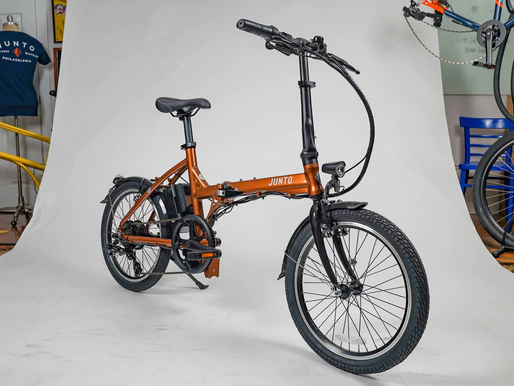
A folding commuter ebike is a compact folding bike frame with an integrated motor and battery, tuned specifically for urban commuting rather than off-road adventures or long-distance touring. Unlike a basic folding bike with no motor, a folding e-bike provides electric assist up to roughly 20–28 mph, depending on its class and local rules – making hills, headwinds, and stop-and-go traffic far less exhausting. Electric assist reduces the physical effort needed for commutes, and these bikes offer seamless transitions between riding, walking, and transit.
Crazy Lenny’s eBikes carries a wide selection of foldable electric bikes suited to Madison riders, from budget-friendly options to higher-end commuter setups.

Why Folding Ebikes Shine for City Commuters
The day-to-day case for a folding commuter ebike comes down to three things: less time wasted, less money spent, and fewer headaches about security. Compact storage makes folding ebikes a practical choice for urban environments – you skip the hunt for bike parking, dodge the risk of outdoor theft, and avoid paying for gas or garage spots.
Folding ebikes are ideal for urban commuting precisely because they fit easily in small spaces. Instead of locking up outside and hoping for the best, you fold and wheel the bike indoors – into classrooms, offices, coffee shops, or your apartment. They address the real problems with outdoor bike parking that plague riders in dense neighborhoods. For daily commutes of 5 to 20 miles round trip – typical of Madison neighborhoods like the East Side, West Side, or near campus – pedal assist makes hills and headwinds manageable without arriving drenched. And they provide a comfortable riding experience for errands, weekend adventures, and general city exploration. You can browse Crazy Lenny’s folding selection to see what commuter-friendly options are currently in stock.
Real-World Portability: Apartments, Offices, and Car Trunks
Portability is the main reason to choose a foldable electric over a standard commuter ebike. Most folding ebikes use a 20-inch wheel size, and when folded, they shrink to roughly the footprint of a large suitcase – compact enough to slide into a standard car trunk or hatchback without removing any wheels. That compact design changes how and where you can store and travel with your bike.
Consider a few Madison scenarios. For apartment storage, a folded ebike slides into a closet, the corner of a studio, or under a loft bed – no dedicated bike room required, which matters in small apartments and older buildings without storage space. For office storage, you can wheel it into an elevator and tuck it beside your desk instead of relying on outdoor racks. For car travel, it fits in a sedan or SUV trunk for weekend trips or park-and-ride commutes. The foldable design also doubles as a security feature: a folded e bike that comes indoors eliminates the need to rely solely on locks, drastically reducing theft risk compared to leaving a full-size bike chained outside. Staff at Crazy Lenny’s can demonstrate exactly how each model folds and fits in your specific vehicle.
Folding Ebikes and Madison Metro Transit: Perfect for Mixed-Mode Commuting
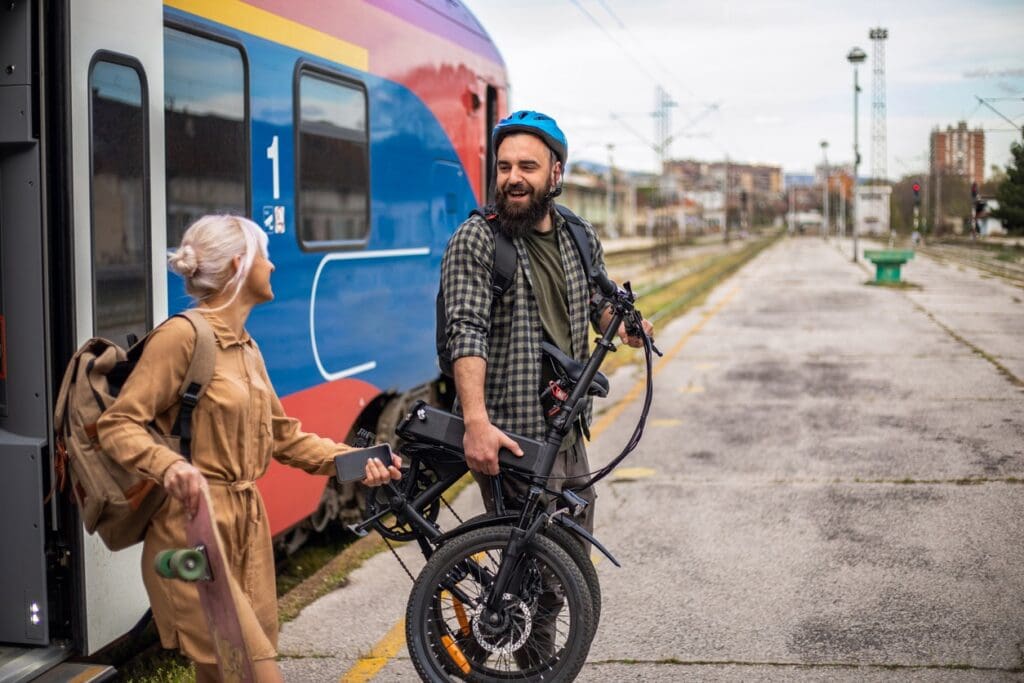
Combining a folding commuter ebike with Madison Metro Transit or campus shuttles can cut commute times and eliminate parking headaches entirely. Folding ebikes can be taken on public transportation, and they work equally well with buses and trains.
The concept is straightforward: ride from home to a bus stop, fold the bike to board, then unfold and ride the final mile to work or class. This “first-mile / last-mile” approach is especially effective for UW–Madison students, downtown workers, and anyone commuting from outlying neighborhoods into the city center. A well-designed folding mechanism allows folding in 10 to 30 seconds, which makes boarding a bus quicker than locking a standard bike outside. Transit rules can vary by system and even by driver, so it’s worth reviewing Madison Metro’s latest guidelines before your first trip. But the core advantage holds: a folded ebike is far easier to bring aboard than a full-size bike is to wrestle onto a front rack.
Ride Feel and Performance: How Folding Ebikes Compare to Regular Commuter Ebikes
Folding commuter ebikes ride more like a compact urban bike than a heavy-duty touring machine – and for most city riders, that’s a perfectly good trade-off. The ride quality differs from a traditional commuter, but it isn’t worse; it’s just different.
Smaller wheels (often 16 to 20 inches) versus full-size wheels like 27.5″ or 700c on traditional commuter models mean slightly more nimble handling but sometimes a bit more sensitivity over rough pavement. Fat tire folding models – with wide tires in the 20″ × 3″ to 4″ range – add more comfort and stability on Madison’s cracked or winter-worn streets and can handle gravel paths and varied terrain with confidence, though at a weight penalty. Wheel size affects both the portability and ride comfort of the bike.
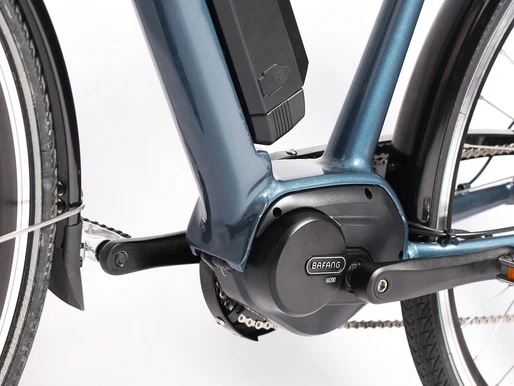
On the motor and battery side, folding e bikes often use hub motors in the 250–750W range with moderate torque for hills and stop-and-go traffic. Pedal assist technology helps flatten hills while commuting, and throttle systems allow for easy cruising when you don’t feel like pedaling. Range is typically optimized for daily commuting – roughly 20 to 50-plus miles, depending on assist level and battery size – not all-day touring. Folding ebikes offer pedal assist for long rides, but if you need more range or a bigger battery for 20-plus-mile one-way commutes, a non-folding commuter e-bike with a larger battery gives a smoother ride at higher speeds and full suspension comfort over longer distances. You can find those options in Crazy Lenny’s Commuter category, which is the better choice for riders who don’t need foldability and prioritize maximum range or top speed.
Who Folding Commuter Ebikes Are (and Aren’t) Right For
Buying the right bike matters more than buying the trendiest one. Long-term satisfaction comes from matching the bike to your actual life, not forcing a mismatch.
Folding ebikes work best for city commuters with limited indoor storage, UW–Madison students in dorms or small apartments, workers who prefer to bring their bike into an office rather than lock it outside, and residents combining e-bikes with car trips or public transportation. If your commute involves multiple modes of transport and your storage space is measured in square feet rather than square yards, a folder is probably your best bet.
On the other hand, folding ebikes are not ideal for riders with long rural commutes or 20-plus-mile one-way trips most days – that long-range demand is better met by a larger-frame commuter with a bigger battery. Heavy cargo haulers who need large racks or longtail cargo frames will find folding models too limited; the built-in rear rack on most folders handles a bag or two, not a week’s groceries. And serious trail riders or off-road enthusiasts are better served by mountain or fat tire all-terrain e-bikes. The big downside of a folder is that it can’t be everything to everyone. Folding ebikes typically weigh between 38 lbs and 65 lbs, which is manageable for most riders but isn’t nothing. Those who need more power, more cargo, or longer distances should explore Crazy Lenny’s broader commuter e-bike selection as a starting point.
Is a Folding Ebike Right for Me? (Quick Decision Guide)
Here’s a quick self-evaluation to help you decide – no sales pitch, just honest criteria that most riders can answer in a few minutes.
If your round-trip commute is under roughly 15 miles on typical weekdays, a folding commuter ebike has more than enough range and battery to handle it comfortably. If your commute regularly exceeds that, consider a larger-battery commuter or cargo model that delivers more range per charge. If your bike must live in a small apartment, dorm, shared hallway, or elevator building – or if you carry it upstairs – a folding model’s compact storage is hard to beat. If you regularly use Madison Metro Transit, intercity buses, or need the bike to fit in a car trunk or RV, a folding ebike is the best folding solution available. If you value flexible storage, security from keeping the bike inside, and city maneuverability more than maximum range or huge cargo capacity, a folding e-bike is likely the right match. Local regulations affect where ebikes can be used, and integrated safety features improve day-to-day usability, so make sure you understand Wisconsin’s class rules before purchasing.
Still not sure? Book a free consultation at Crazy Lenny’s for a personalized recommendation – no pressure, just honest advice on whether a compact ebike commuter or standard commuter e bike makes more sense for your routine.

Key Features to Look For in a Folding Commuter Ebike
When comparing folding commuter ebikes, consider balance, compactness, comfort, and long-term reliability. Not all folders are created equal – the details matter.
The folding frame and folding mechanism are the heart of any folder. Look for a hinged main tube and folding stem with secure locking latches that fold in under 30 seconds. An intuitive folding mechanism enhances usability, while folding mechanisms vary by manufacturer, affecting ease of use – so test before you buy. Adjustable handlebars and folding pedals help reduce the folded footprint further. Build quality at the hinge points is critical for daily commuters who fold and unfold hundreds of times a year.
For wheels and tires, 20-inch wheels are the common sweet spot for city use – portable yet stable. Fat tire folding options (20″ × 3″ to 4″) provide extra grip and cushioning on rough pavement or light gravel paths, while ultra-compact 16-inch wheels maximize portability but sacrifice some ride stability.
Motor and battery specs vary widely across the price range. Here’s a snapshot of popular folding models to illustrate:
| Model | Motor | Range | Weight | Price |
|---|---|---|---|---|
| GoTrax eFold | 350W | 40 mi | 52.2 lb | $499 |
| Lectric XP Lite 2.0 | 300W | 45 mi | ~49 lb | $799 |
| Ride1Up Portola | 750W | 50 mi | – | $895 |
| GoTrax Z4 Pro | 500W | – | – | $943 |
| Lectric XP4 750 | 750W | 85 mi | – | $1,299 |
| Heybike Ranger 3.0 Pro | 750W | 90 mi | ~75 lb | $1,399 |
Battery power ratings of 250W to 350W are suitable for flat city commutes, while models with more power – like the Ride1Up Portola’s 750W motor – handle steeper hills. The Lectric XP4 750 stands out with a 330 lb payload capacity, and Heybike offers its Ranger 3.0 Pro with an impressive 90-mile range and peak power for riders who need powerful performance on hillier routes. The Lectric XP Lite (the XP Lite 2.0 specifically) is a solid entry into the lightweight category. Premium folding lines like the Brompton C Line push even lighter weights but at much higher price points. A removable battery allows for convenient indoor charging, and proper safety certification is essential for the reliability of any ebike you’re considering.
For commuter-friendly gear, look for integrated lights, fenders, a rear rack for bags, and accessories like trunk bags or baskets that work with folding frames. Hydraulic disc brakes (or at minimum hydraulic brakes) offer consistent stopping power in wet Madison weather. Explore Crazy Lenny’s current best folding electric bike options and test how each model’s features feel in person.
Buying and Testing a Folding Ebike in Madison, WI
Buying a folding electric bike sight-unseen online is a gamble. Folded dimensions, weight, hinge feel, and ride comfort all vary enough between models that hands-on testing matters – especially on a compact frame where fit is less forgiving.
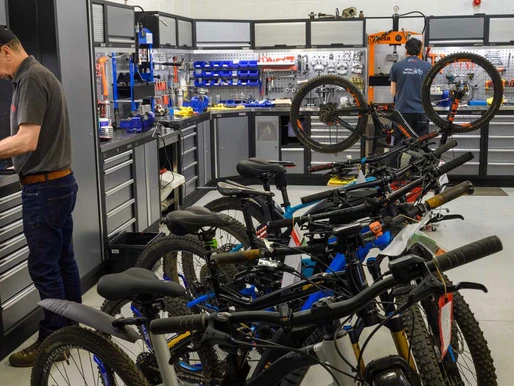
At Crazy Lenny’s eBikes in Madison, students, apartment dwellers, and city workers can compare folding models side by side, ask questions about car trunk fit, and learn basic folding techniques from staff who work with these bikes daily. In-person test rides let you feel the real differences in weight, folding mechanisms, fat tire versus slim tire handling, and overall fit. Maintenance can be simplified by using standard components – something the store’s team can help you evaluate when choosing a model.
If you want to try before you commit, Crazy Lenny’s eBike rentals let you take a folding ebike out for a day or a weekend – ideal for testing your actual commute, campus routes, and bike paths.
Ready to browse? Check the Folding category for current deals, or fill out the Free eBike Consultation form for tailored advice on which folder fits your life.
Care, Maintenance, and Long-Term Use of Folding Ebikes
A folding commuter ebike, like any electric bike, lasts longer and rides better with simple routine care. The good news is that most maintenance is straightforward.
Regular chain lubrication and brake checks keep things running smoothly. Tire pressure checks matter even more on smaller wheels or fat tire setups, where low pressure affects handling noticeably. And periodic inspection of folding joints and latches for tightness and wear is essential – these are load-bearing components that see daily stress.
For battery care, advances in battery technology have improved longevity, but Wisconsin’s climate still demands attention. Charge indoors, avoid leaving batteries in extremely hot or cold cars, and store the battery inside during winter months when temperatures drop below freezing. These habits extend battery life significantly.
Weight matters when it comes to carrying. Remember: a 75 lb folding ebike is still 75 lb when folded. The Heybike Ranger 3.0 Pro weighs around 75 pounds – manageable on flat ground, but a challenge up three flights of stairs. Choosing a lightweight folding bike is crucial if you carry it frequently. The lightest folding ebike weighs about 46 pounds, and the Lectric XP Lite 2.0 weighs approximately 49 pounds – both far more manageable for daily stair hauling. Crazy Lenny’s eBikes provides professional service and repairs for folding ebikes, making long-term ownership easier for busy city riders.

FAQs: Folding Commuter Ebikes
How small does a folding ebike actually get, and will it fit in my car trunk?
Most folding ebikes with 20-inch wheels fold down to roughly suitcase-sized dimensions – typically around 30 to 40 inches long, 25 to 30 inches tall, and about 18 to 25 inches wide, depending on the frame design. That fits comfortably in most sedan trunks, hatchbacks, and SUVs. If trunk fit is a top priority, bring your vehicle when you visit Crazy Lenny’s – staff can fold several models and test the fit in your specific car, so there are no surprises.
Are folding ebikes as powerful as regular electric bikes?
Many folding e-bikes use hub motors in the same 350–750W range as standard commuter models, delivering plenty of power for city hills and traffic. The Ride1Up Portola, for example, features a 750W motor capable of handling steep climbs. The main trade-off isn’t motor power – it’s battery size. Folding models sometimes carry slightly smaller batteries to keep weight down, which can limit range compared to a full-frame commuter. But for daily commutes under 15 miles round-trip, most riders will never notice the difference.
How much does a folding commuter ebike weigh?
Folding ebikes typically weigh between 30 and 60 pounds, with most commuter-oriented models landing in the 45 to 55 lb range. Lighter builds, such as the Lectric XP Lite 2.0, come in at about 49 pounds, while heavier fat tire models like the Heybike Ranger 3.0 Pro reach around 75 pounds. If you’ll be carrying the bike up stairs daily, prioritize models under 55 lbs and look for integrated carry handles.
Can I ride a folding ebike on Madison bike paths and local trails?
Folding ebikes are classified the same as other electric bikes under Wisconsin law, so where you can ride depends on the bike’s class (1, 2, or 3) and local regulations. Class 1 and Class 2 ebikes (assist up to 20 mph) are generally allowed on most city bike paths and paved multi-use trails. Class 3 models (assist up to 28 mph) have some restrictions on certain paths and require riders to be at least 16 years old. Check current signage and local rules before riding unfamiliar routes.
Where can I buy a folding commuter ebike in Madison, WI?
Crazy Lenny’s eBikes is Madison’s go-to store for folding and commuter electric bikes, with a large in-store inventory you can test ride before buying. Browse the Folding category online, visit the Madison showroom to compare models hands-on, or schedule a free consultation to get personalized recommendations based on your commute, storage situation, and budget.
Do I need to register or insure a folding e-bike in Wisconsin?
Under current Wisconsin law, electric bikes that meet the state’s definition (motor of 750W or less, classified as Class 1, 2, or 3) do not require registration, insurance, or a driver’s license. They’re treated as bicycles, not motor vehicles. That said, it’s always smart to check for any municipal updates, and many riders choose to insure higher-value ebikes through renters or homeowners policies for theft and damage protection.