

If you’re considering buying an electric bike—or already own one—you’ve probably asked the big question: how far can an e-bike go on a single charge? The answer isn’t one-size-fits-all. Understanding e-bike range explained properly means looking at several variables that influence performance in real-world riding conditions. To truly understand your e-bike’s range potential, you need to consider both the bike’s electrical components and the actual conditions you’ll encounter while riding.
In this guide, we’ll break down e-bike battery range, the key factors that affect e-bike range, and how you can maximize every mile.
What Is E-Bike Range?
At its simplest, range refers to the distance your e-bike can travel on a single battery charge. Most electric bikes typically offer anywhere from 20 to 80 miles per charge, but that range can vary widely depending on how and where you ride.
When discussing e-bike range explained, it’s important to understand that manufacturers often list ideal conditions—flat terrain, low assist, and lightweight riders. Real-world performance is usually different.
Manufacturer range estimates are often based on these ideal conditions and may not reflect real-world usage, so it’s important to consider how range estimates are derived and look for tools or methods that provide more precise calculations based on your specific riding conditions and e-bike specifications.
How Far Can an E-Bike Go?
So, how far can an e-bike go in everyday use?
Here’s a realistic breakdown of how many miles on a single charge you can expect at each assist level:
- Low pedal assist (eco mode): typically 50–80 miles on a single charge
- Moderate assist: usually 30–60 miles on a single charge
- High assist / throttle-heavy use: often 20–40 miles on a single charge
Most ebikes fall within the 20 to 80 miles on a single charge range, depending on battery capacity, terrain, and riding conditions.
Your actual e-bike battery range depends on multiple conditions, which we’ll explore next.
Key Factors That Affect E-Bike Range
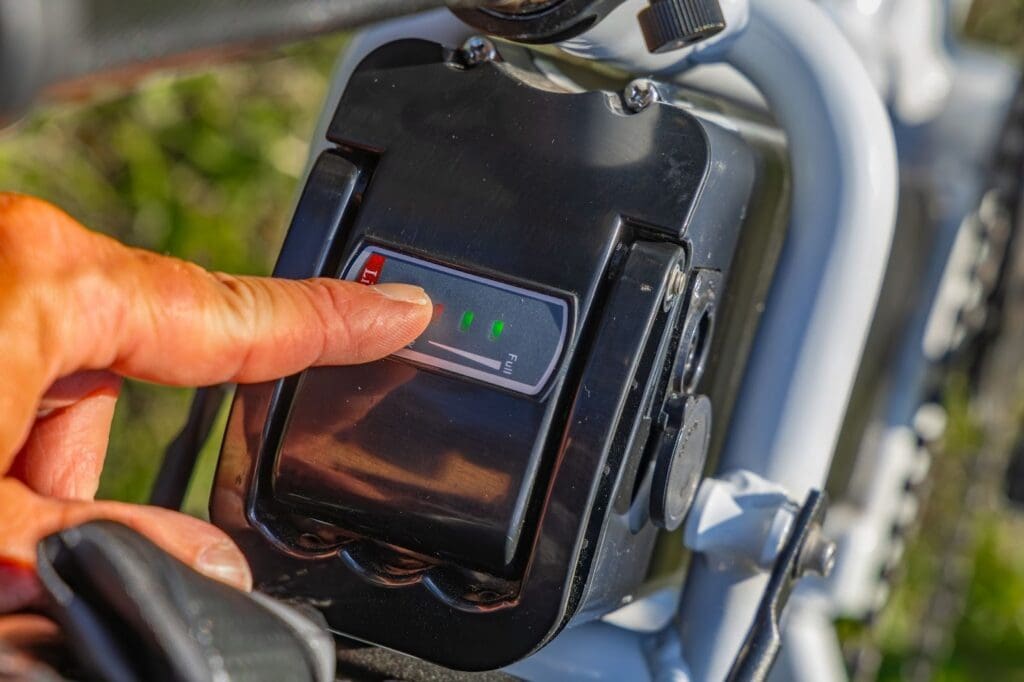
Understanding the various factors and multiple factors that affect e-bike range—including both electrical and non-electrical elements—is essential if you want to predict performance and avoid getting stranded mid-ride.
1. Battery Capacity (Watt-Hours)
Battery size is the biggest driver of range. In addition to watt-hours (Wh), battery capacity is also measured in amp hours (Ah); higher amp hours typically mean a longer range. Ebike battery specifications—including amp hours (Ah), watt hours (Wh), and voltage—all play a role in determining range. Most modern electric bike batteries use lithium batteries, which offer better efficiency, higher energy density, and longer lifespan compared to older battery types. A larger or bigger battery stores more energy, and higher volts (such as 52V compared to 36V or 48V) can provide more power and extended range. Various batteries with different capacities and voltages will impact the overall range and performance of an e-bike.
- 300–400Wh: Shorter rides
- 500–700Wh: متوسط commuting range
- 750Wh+: Longer-distance capability
A higher-capacity battery directly increases your e-bike battery range, especially for longer commutes or weekend rides.
2. Level of Pedal Assist
Pedal assistance levels, also known as power modes, directly impact how much help the motor provides and how quickly the battery is used. The more pedal assistance you use, the faster your battery drains.
- Eco mode: Maximizes efficiency
- Tour mode: Balanced performance
- Turbo mode: Highest power, shortest range
If you’re wondering how far an e-bike can go, your assist level is one of the biggest variables.
3. Terrain and Elevation
Flat paths require far less energy than hills. Climbing steep terrain demands more power from the motor, reducing range significantly.
- Flat terrain = longer range
- Rolling hills = moderate range
- Hilly terrain = reduced range
- Steep climbs = reduced range
This is one of the most overlooked factors that affect e-bike range.
4. Rider Weight and Cargo
Heavier loads require more motor output. If you’re carrying gear, groceries, or passengers, expect a noticeable drop in e-bike battery range.
5. Wind and Weather Conditions
Riding into a strong headwind can feel like climbing a hill—it increases resistance and drains your battery faster. Cold temperatures also reduce battery efficiency.
- Cold weather = reduced battery performance
- Wind resistance = increased power usage
Extreme temperatures, both hot and cold, can reduce battery efficiency and overall range.
These environmental elements play a big role in e-bike range explained scenarios.
6. Tire Pressure and Rolling Resistance
Underinflated tires create drag, forcing the motor to work harder.
- Proper tire pressure = better efficiency
- Knobby or fat tires = more resistance
Maintaining your tires is a simple way to improve range.
7. Riding Style
Riding at high speed or using full throttle drains the battery faster, significantly reducing your e-bike’s range. Aggressive riding—frequent acceleration, high speeds, and heavy throttle use—burns through battery quickly.
Maintaining a moderate average speed and easing into the throttle, rather than riding at full throttle constantly, can help maximize your e-bike’s range and improve battery efficiency.
Smooth, consistent pedaling helps extend your e-bike battery range.
Battery Usage and Conservation

Maximizing your electric bike range isn’t just about having a bigger battery—it’s about how you use and care for it. Smart battery usage and conservation can make a significant difference in how many miles you get from a single charge, whether you’re commuting daily or heading out for a weekend adventure.
To get the most out of your electric bike, pay attention to the factors that affect battery usage. Choosing the right pedal assist level for your route, keeping your tire pressure optimal, and adapting to changing riding conditions all help conserve battery power. Even small adjustments—like easing off the throttle on flat terrain or coasting downhill—can extend your riding range.
How to Maximize Your E-Bike Range
If you want to get the most out of your ride, here are practical tips:
- Use lower pedal assist levels when possible
- Maintain steady speeds instead of frequent stops and starts
- Keep tires properly inflated
- Reduce extra weight when you can, as carrying extra weight or riding aggressively can result in less range
- Charge and store your battery at room temperature
- Plan routes with fewer steep hills
- Use mechanical gears efficiently to conserve battery and achieve a longer range
Proper battery care and smart riding habits can extend battery life and provide extended range, helping you get the most distance out of every charge.
These strategies can make a noticeable difference in how far an e-bike can go.
Real-World Example
Let’s say you have a 500Wh battery and ride at moderate assist on mixed terrain. For the average rider, the potential range depends on battery consumption and how much energy is used per mile. You might expect:
- Average range: 35–55 miles
But if you switch to high assist, carry cargo, and ride uphill into the wind, battery consumption increases, and that same bike might only get:
- 20–30 miles
Understanding your bike’s electrical components and how much energy you use per mile can help you better estimate your real-world riding range. That’s why understanding e-bike range explained goes beyond manufacturer specs—it’s about how you actually ride.
Final Thoughts

So, how far can an e-bike go? The honest answer: electric bike range depends on a combination of battery capacity, riding conditions, and rider habits. By understanding the factors that influence your bike’s range, you can better predict performance and ride with confidence.
E-bikes are incredibly versatile, and with the right habits, you can extend your range and enjoy longer, more efficient rides—whether you’re commuting, exploring, or just cruising. Understanding your bike’s range can help you plan longer, more enjoyable rides.
Questions & Answers about E-Bike Range

1. What is the most important factor in having e-bike range explained for a new buyer?
While manufacturers often list a wide window, most electric bikes typically offer a range between 20 and 80 miles per charge. This distance is heavily influenced by the pedal assist level you select. For instance, using “Eco” mode can help you achieve 50 to 80 miles, while heavy throttle use or high assist levels may reduce that distance to 20 or 40 miles.
2. How does battery capacity specifically affect e-bike range?
Battery capacity, measured in Watt-Hours (Wh), is the primary indicator of how much energy your bike can store. A 500Wh to 700Wh battery is standard for most commuters, providing a balanced range for daily trips. Higher capacity batteries, such as those with 750Wh or more, are essential for long-distance rides or hilly terrain where the motor must work harder and consume more energy per mile.
3. Why do hills and elevation reduce e-bike battery range so quickly?
Gravity is a significant factor in battery consumption. When you climb steep terrain, the motor requires much higher power output to maintain speed compared to riding on flat paths. This increased demand drains the lithium battery significantly faster. Understanding this helps riders plan more efficient routes by choosing flatter paths when they need to conserve energy for a long trip.
4. Can weather conditions really impact how far an e-bike can go?
Yes. Temperature and wind play major roles in e-bike performance. Cold weather reduces the chemical efficiency of lithium batteries, meaning they cannot hold or discharge power as effectively as they do at room temperature. Additionally, riding into a strong headwind increases resistance, forcing the motor to draw more current and reducing the total miles you can cover on a single charge.
5. How can I maximize my e-bike range without upgrading the battery?
You can extend your range by practicing smart riding habits. Keeping your tires properly inflated reduces rolling resistance, making it easier for the motor to move the bike. Additionally, using your mechanical gears efficiently—shifting into lower gears for stops and starts—prevents the motor from having to do all the heavy lifting, which preserves battery life for later in your ride.
6. What is the difference between manufacturer range estimates and real-world riding?
Manufacturer range estimates are often calculated under “ideal” conditions, such as a lightweight rider on flat pavement with no wind. Real-world riding involves variables like stop-and-go traffic, varying rider weight, and different assist levels. To get a precise calculation for your specific needs, it is best to track your average battery consumption over several typical rides to see how many miles you actually achieve per Watt-Hour.