
Introduction: Rethinking the Family Car Trip
Most car trips aren’t long road trips-they’re short, routine errands: the school drop-off, the grocery run, the trip across town for soccer practice. That’s exactly the category of driving a cargo e-bike is built to replace. Cargo electric bike use has expanded dramatically over the past few years as batteries got stronger, motors got smarter, and frames got tougher, turning what used to be a niche cyclist’s tool into a genuinely practical second (or first) vehicle for Madison families and small business owners alike.
This guide walks through exactly what a cargo e-bike can carry, the everyday uses that make the biggest dent in your driving, and how to choose the right model for your specific routine.
What Is a Cargo E-Bike?
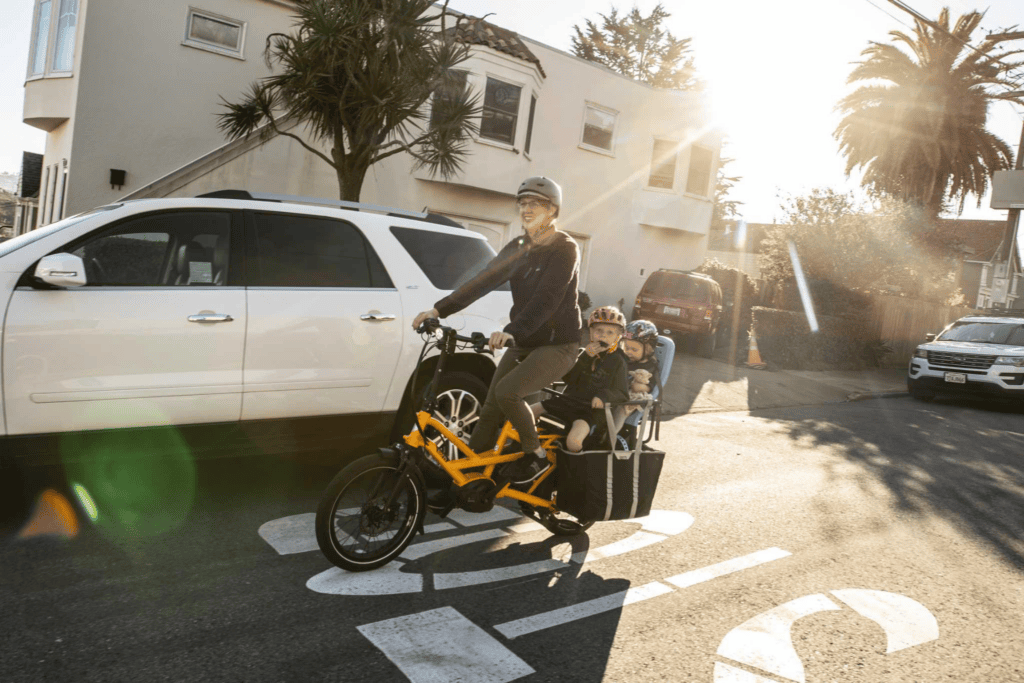
A cargo e-bike is built around hauling capacity first: a longer wheelbase, a reinforced frame and rack, and a motor, usually mid-drive, tuned for torque rather than just top speed. Some models extend the rear of the bike (long-tail cargo bikes) for child seats or panniers, while others build a cargo box or platform in front of the rider (front-loaders) for better visibility of what you’re carrying. Electric cargo trikes offer a third option, trading a bit of maneuverability for rock-solid stability when fully loaded. Our cargo eBike lineup includes several configurations, and a consultation will help match the right one to your routine.
Top Cargo Electric Bike Uses for Everyday Life
School Runs and Family Transport
With the right child seats and safety harnesses, a cargo e-bike comfortably carries one or two kids to school or daycare, turning a stressful morning car line into a quick, fresh-air ride. Many Madison parents find that the school run becomes the best part of the morning rather than the most dreaded.
Grocery and Errand Hauling
A cargo e-bike’s rear rack or front box easily holds a full week of groceries, especially with add-on panniers or a cargo box. For most households, this single use case alone eliminates a large share of weekly car trips.
Commuting with Gear
Commuters who need to carry a laptop bag, gym clothes, lunch, and maybe a change of shoes get all the benefits of e-bike commuting, covered in detail in our guide to e-bike commuting, without worrying about squeezing it all into a small backpack.
Small Business and Delivery Use
Local delivery riders, contractors carrying tools, and small business owners making short-hop deliveries around Madison increasingly use cargo e-bikes to skip parking headaches entirely, especially downtown and around campus, where car parking is limited and expensive.
Recreation and Adventure Hauling
Cargo e-bikes aren’t just for errands-they’re also popular for hauling camping gear, coolers for a lake day, or fishing equipment, turning a weekend outing into its own kind of adventure before you even arrive.
How Much Can a Cargo eBike Actually Carry?
Most cargo e-bikes we carry support a combined rider-plus-cargo weight capacity in the 300 to 450+ lb range, with some heavy-duty models rated even higher. That’s enough for two kids and a backpack, several bags of groceries, or a substantial load of work equipment. Mid-drive motors provide the torque needed to keep that weight moving comfortably, even up the modest hills found around Madison neighborhoods.
Cargo eBikes Through Madison’s Seasons
A cargo e-bike doesn’t have to be a fair-weather-only tool. In spring and fall, cargo bikes are arguably at their best-mild temperatures, dry pavement, and the full daylight hours make school runs and errands genuinely pleasant. Through Madison’s hot summer stretches, an early-morning or evening errand run beats sitting in a warm car, and a canopy or sunshade accessory keeps younger passengers comfortable. Winter is when families most often ask about backup plans: some riders switch to a studded-tire setup and keep riding all season, while others use the cargo bike as their primary vehicle from spring through fall and lean on a car during the heaviest snow and ice stretches. Either approach still meaningfully cuts down on total driving miles across the year.
Accessories That Make a Cargo eBike More Useful
The right accessories turn a capable cargo e-bike into a genuinely complete car replacement. Weatherproof cargo boxes or panniers protect groceries and gear from rain. Child seats with full harnesses and footrests are essential for family use, and a rain canopy keeps younger riders dry and warm in cooler months. A sturdy kickstand-often a wider double-leg design on cargo models-makes loading and unloading stable and safe, especially with a squirming toddler or a heavy grocery bag in hand. Locking storage is worth considering for delivery or business use where the bike may be left unattended for short stretches. Our team can walk through which accessories make the most sense for your specific cargo e-bike uses during a consultation, rather than guessing at a generic accessory list.
Cargo eBike vs Car: What You Really Save
Swapping short car trips for cargo e-bike trips adds up the same way described in our breakdown of how to replace a car with an e-bike: no gas for those trips, no downtown parking fees, and far less wear on a car engine from repeated short drives. For many two-car households, a cargo e-bike is enough to comfortably go down to one car, saving on insurance, a car payment, or both.
Choosing the Right Cargo eBike for Your Life
The right cargo e-bike depends on what you’re hauling and how often. Families with young kids often prefer a longtail or front-loader with a full child-seat setup, while business owners may prioritize a large front cargo box for visibility and easy loading. Riders who want maximum stability, especially when fully loaded, sometimes prefer an electric trike configuration instead. Our team can walk through the tradeoffs during a Free eBike Consultation, and you can also browse our rental options to test a cargo e-bike on your actual routine before buying, or check our used and demo inventory for a lower-cost way to get started.
The Bottom Line on Cargo eBike Uses
The appeal of a cargo e-bike isn’t a single dramatic use case-it’s the sheer number of small, everyday trips it can absorb. School runs, grocery hauls, work commutes, weekend adventures, and the occasional delivery all add up to real miles taken off a car odometer and real dollars kept out of a gas tank and a parking meter. For Madison families and small business owners weighing whether a cargo e-bike is worth it, the honest answer is almost always to try one before deciding, since the capability is easy to underestimate until you’ve actually loaded one up and ridden it yourself.
Frequently Asked Questions
What are the most common cargo electric bike uses?
The most common cargo electric bike uses are school and daycare runs, grocery and errand hauling, commuting with work gear, small business deliveries, and hauling recreational gear like camping or lake equipment.
How much weight can a cargo e-bike carry?
Most cargo e-bikes support a combined rider-plus-cargo weight capacity of 300 to 450 lbs or more, which is enough capacity for multiple children, a full load of groceries, or a substantial amount of work equipment.
Can a cargo e-bike really replace a second family car?
For many households, yes. A cargo e-bike can absorb the majority of short routine trips like school runs and errands, making it realistic for some two-car families to comfortably move down to one car.
What is the difference between a long-tail and a front-loader cargo e-bike?
A long-tail cargo e-bike extends the rear of the bike for child seats or rear panniers, while a front-loader places a cargo box or platform in front of the rider, offering better visibility of what’s being carried. Both are effective; the right choice depends on what and how you plan to haul.
Are cargo e-bikes good for hills?
Yes, when equipped with a mid-drive motor tuned for torque, cargo e-bikes handle moderate hills confidently, even when fully loaded, making them practical for the varied terrain found in most Madison neighborhoods.
Ready to see what an eBike can do for you?
Visit Crazy Lenny’s eBikes at 6017 Odana Rd, Madison, WI, book a Free eBike Consultation, or call (608) 276-5921. North America’s largest single-location eBike retailer is ready to match you with the right bike.