
Key Takeaways
- The best ebike for beginners depends on how you ride most: commuting, casual rides, trail riding, or carrying kids and cargo.
- Class 1 and Class 2 electric bikes are usually the best starting point because they top out at 20 mph and feel easier to control.
- Fit, comfort, safe batteries, and local service matter more than chasing the biggest motor or the lowest online price.
- A good beginner e-bike typically features simple controls, reliable components, and a comfortable riding position, making it easier for new riders to gain confidence.
- Crazy Lenny’s eBikes in Madison, WI offers in-person test ride options, used/demo deals, rentals, and an eBike Finder to help match riders with the right model.
Choosing your first electric bike should not feel like studying for an engineering exam. You just need to understand a few key differences, ride a few models, and pick the bike that makes you feel comfortable, safe, and excited to ride again.
Start Your E-Bike Journey: Match the Bike to Your Riding Style First
Before comparing bike brands, motors, or battery life, start with one simple question:
Where will you ride most often?
Your answer points you toward a very different e bike than someone else’s. A rider commuting through city streets needs different features than someone exploring gravel paths, riding around campgrounds, or replacing a second car with a cargo bike.
Common beginner profiles in 2026 include:
- Daily commuters who ride to work, school, errands, or the grocery store.
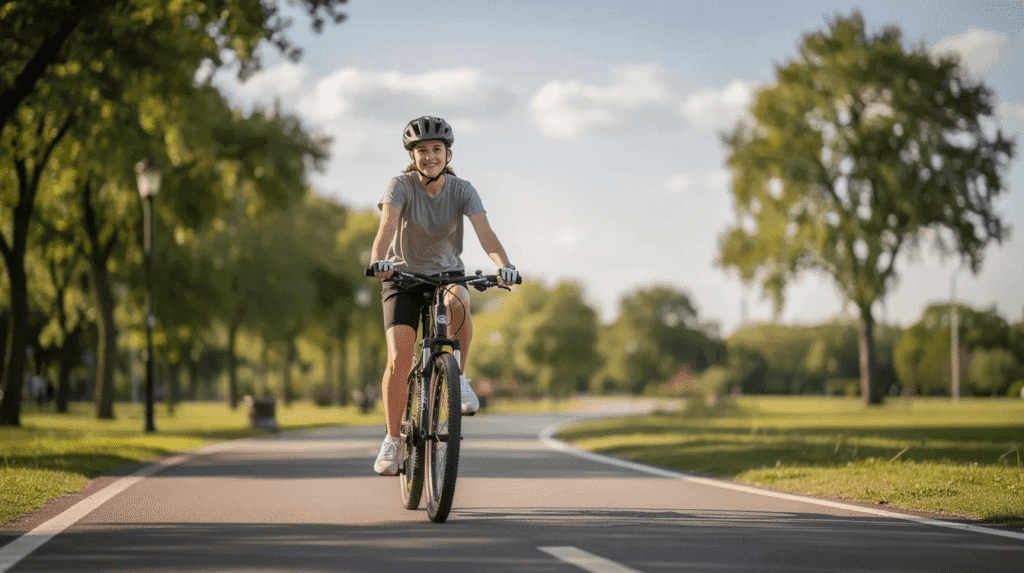
- Recreational weekend riders who want a smoother ride on neighborhood roads, lake paths, and parks.
- Aspiring trail riders who want light trail riding now and more confidence on rough terrain later.
- Family or cargo-focused riders who need to carry kids, groceries, work gear, or supplies.
Each profile points toward a different “best electric bike” category. Commuters often do best on city or commuter models. Leisure riders may prefer electric cruiser bikes. Trail riders often look at mountain bikes, all-terrain models, or fat tire e bikes. Apartment dwellers may need a folding electric bike, while parents may need cargo e bikes with a stronger frame and rear rack.
This article focuses on entry level and first-time buyers, not ultra-light electric road bikes, race-focused road bike setups, or high-powered off road riding machines. At Crazy Lenny’s eBikes, beginners can compare several categories in one visit so they can feel what is natural before they buy.
Understanding E-Bike Classes (and Which Are Best for Beginners)
E bike classes are legal categories used in the United States to describe how electric assist works and how fast the motor can help you go. The three-class system is widely used, but the use of each class of eBike can vary by state, city, and area, so it is important for riders to check local regulations before purchasing or riding.
According to the common U.S. framework explained by PeopleForBikes, there are three electric-assist classes available in the United States: Class 1, Class 2, and Class 3, each with different speed and assist characteristics.
Here is the beginner version:
- Class 1 eBikes provide pedal-assist only, with a maximum speed of 20 mph.
- Class 2 eBikes can also have a throttle mode, allowing for the same maximum speed without pedaling.
- Class 3 eBikes are pedal-assist only as well, but they can assist riders up to a maximum speed of 28 mph, making them suitable for keeping up with traffic in urban settings.
Put another way, e-bikes are classified into three categories: Class 1 is pedal-assist only with a max speed of 20 mph, Class 2 has pedal-assist and throttle with a max speed of 20 mph, and Class 3 is pedal-assist only with a max speed of 28 mph.
For most beginners, Class 1 and Class 2 are the best starting point. They feel calmer, are easier to control, and are more commonly allowed on bike paths than faster Class 3 models. Many commuter models and electric cruiser bikes at Crazy Lenny’s can be set up in beginner-friendly ways, and our staff can explain rules around Madison, WI and other areas.
If you plan to ride fast in car traffic every day, Class 3 may eventually make sense. But for a first e bike journey, it is usually better to build confidence on a slower, easier platform first.
Key Components Beginners Should Care About Without Getting Overwhelmed
New riders do not need to become mechanics. However, understanding a few basics can help you avoid buying the wrong e bike online.
The most important components are motor type, battery size, sensors, brakes, and frame fit.
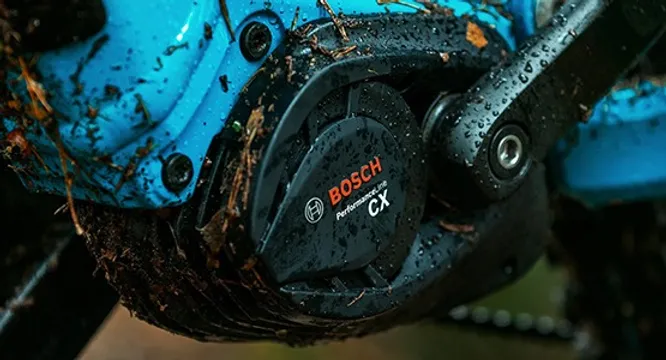
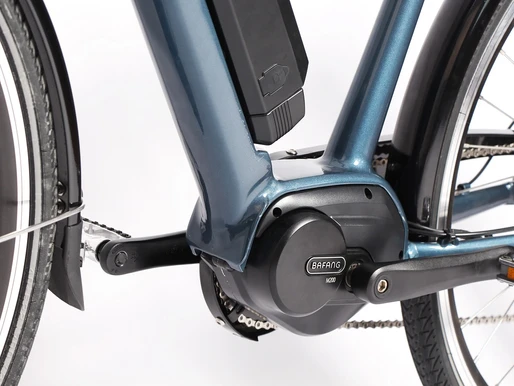
- Motor type and power: Most beginner electric bikes use either a hub motor or a mid drive motor. A rear hub motor sits in the rear wheel and is common, simple, and low-maintenance. A mid drive motor sits near the pedals, gives better balance, and often feels more like a regular bike. The motor type affects how an e-bike accelerates and handles hills; rear hub motors are low-maintenance, while mid-drive motors offer better weight distribution and a more traditional riding feel.
- Power range: Typical beginner motors run from 250W to 750W. For many entry level riders, 500W to 750W rear hub setups are a practical sweet spot. A 750w motor can help with hill climbing, heavier riders, and cargo, but the bike still needs good brakes and enough battery to support it.
- Battery capacity: Battery capacity, measured in watt-hours, determines the distance an e-bike can travel on a single charge, with a capacity between 400Wh and 500Wh recommended for commuting. Amp-hours, or Ah, also appear on spec sheets, but watt-hours give a clearer picture of stored energy.
- Real-world range: Quality entry-level e-bikes generally range from $999 to $2,000, providing essential features like 500-750W motors and 15-20Ah batteries with ranges of 50-80 miles. Most quality beginner e-bikes deliver a range of 50-80 miles per charge, depending on assist level, rider weight, and terrain. In mixed conditions, wind, hills, fat tires, and high assist can reduce that number, so beginners should avoid treating “up to” range claims as guarantees.
- Sensors: A torque sensor measures how hard you pedal and adds power naturally. Torque sensors provide seamless power assistance based on the rider’s pedaling effort, creating a natural riding experience. A cadence sensor detects that the pedals are turning and gives assistance based on the selected assist level. Cadence sensors detect when the pedals are turning and provide an instant power boost, which may be surprising for inexperienced riders.
- Brakes: Most modern e-bikes use disc brakes. Mechanical disc brakes are cable-operated and easier to service, while hydraulic disc brakes use fluid for stronger stopping with less hand effort. Hydraulic disc brakes offer superior stopping power with less hand effort compared to mechanical disc brakes, which is crucial for heavier and faster e-bikes. Hydraulic brakes are especially helpful for hills, cargo bikes, and riders with limited hand strength.
For a beginner, key features in an e-bike include a torque sensor, hydraulic disc brakes, and a moderate 500W motor with a 500Wh battery for a balanced riding experience.
Beginner-friendly electric bikes typically feature simple controls, reliable components, and a comfortable riding position, making them ideal for new riders. Crazy Lenny’s technicians can walk you through these parts in plain language and help steer you away from underpowered, poorly supported, or uncertified electric bikes.
How Your Riding Style Shapes the “Best” Beginner E-Bike
No single electric bike is best for everyone. Your route, posture, storage space, cargo needs, and comfort level all affect the right choice.
Here is how riding style changes the decision:
- Commuter-focused riders should prioritize an upright riding position, fenders, integrated lights, a rear rack for panniers, and reliable disc brakes. City riding often means frequent stops, car doors, traffic lights, and car traffic, so visibility and control matter more than top speed.
- Comfort and leisure riders should look at electric cruiser bikes with step-through frames, swept-back handlebars, wider saddles, and a relaxed riding position. These models are built for comfort, easy cruising, and low-stress weekend rides.
- Trail and gravel riders should consider hardtail e mountain bikes, all-terrain models, or fat tire e bikes with a suspension fork, knobby tires, and a stable aluminum frame. Some advanced models add rear suspension, but many beginners are better served by a simpler hardtail first.
- Parents and heavy haulers should look at a cargo bike or cargo e bikes with long racks, strong frames, integrated lights, high payload ratings, and strong brakes. A step-through frame is highly recommended for those carrying cargo or who have limited mobility, as it allows easier mounting and dismounting than traditional step-over frames.
Crazy Lenny’s showroom is organized so beginners can compare commuters, cruisers, fat tire models, folding options, and cargo setups without guessing from photos. That is especially useful because ride quality is something you feel, not something you can fully understand from a spec sheet.
Beginner-Friendly E-Bike Types Explained
Modern electric bikes come in several main types. At Crazy Lenny’s eBikes, many are available as new, used, and demo models, which gives first-time buyers more ways to stay within budget.
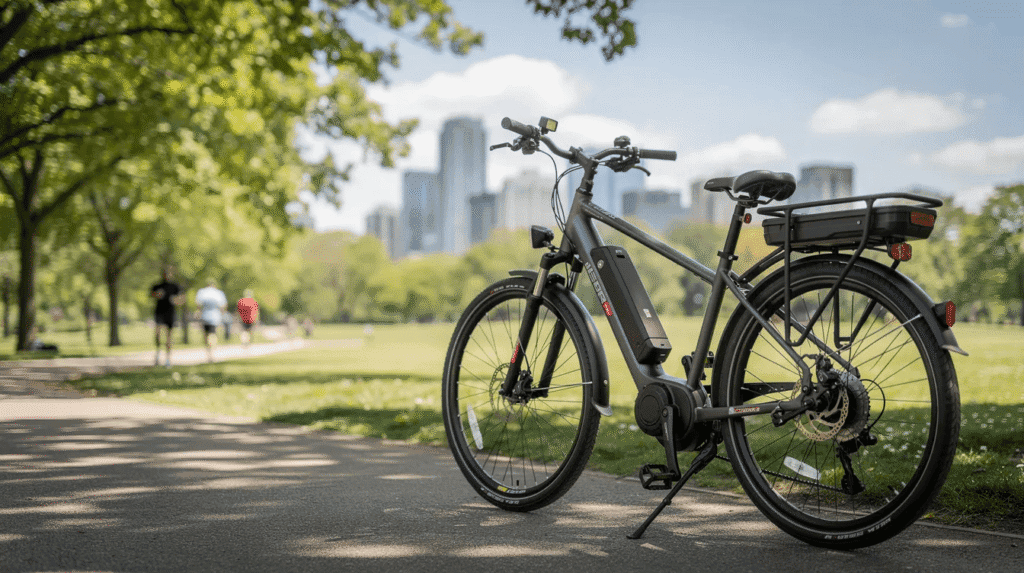
- Commuter and city e bikes: These often use 27.5-inch to 29-inch wheels, mid-width tires, efficient geometry, integrated lights, fenders, and racks. They are ideal for urban riders replacing short car trips and for city riders who want practical transportation.
- Electric cruiser bikes: These usually have upright seating, balloon-style tires or fat tires, swept-back bars, simple controls, and a comfortable riding position. They are great for casual rides, campgrounds, lakefront paths, and neighborhood loops.
- Fat tire all-terrain e bikes: These models use wide 4-inch tires for stability and traction. Fat tire e bikes are particularly good for beginners due to their superior stability, better shock absorption, and confidence-inspiring traction on various surfaces. The tradeoff is weight. E-bikes typically weigh between 45 to 70 pounds, impacting rider stability and ease of handling. A fat tire e model may feel secure while riding but harder to lift onto a bike rack.
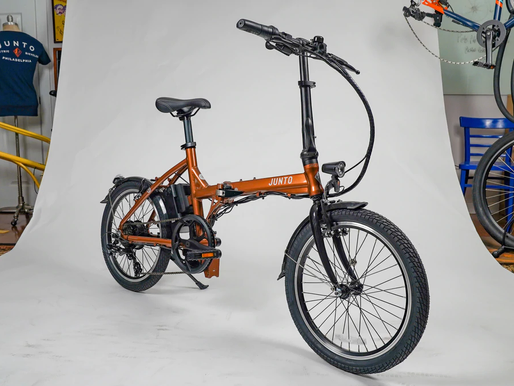
- Folding e bikes: These are compact and convenient for apartments, RVs, dorms, and car trunks. A folding bike can be a smart choice if storage matters more than full-size ride feel. The Lectric XP4 is a popular folding e-bike that features a 500W motor, a range of 65-70 miles, and is priced at $999, making it an excellent choice for beginners looking for a compact and versatile option. The Ride1UP Portola offers a 750W motor and a compact folding frame, making it suitable for both shorter and taller riders, with a price point of $1,000, which is appealing for beginners.
- Cargo and utility e bikes: These use extended racks, sturdy frames, and higher carrying capacity. They are increasingly popular as “second cars” for families in 2026, especially when paired with child seats, panniers, and high-quality locks.
Beginners also ask about specific models they have seen online. The Velotric Discover 2 features a 750W motor and a dual-sensor system that allows riders to switch between cadence and torque sensing, providing a customizable riding experience for beginners. The Aventon Aventure 3 is a fat tire e-bike that combines comfort and performance, featuring a 750W motor and a range of up to 80 miles, making it a solid choice for new riders looking for stability and versatility. The Himiway D5 2.0 is highlighted as an excellent beginner-friendly e-bike due to its automatic gear shifting and switchable torque/cadence modes, making it easy for new riders to adapt.
Availability changes, and specs are only part of the story. That is why a first-hand ride is more useful than comparing direct to consumer brands only on price.
Fit, Comfort, and Confidence: What Beginners Should Prioritize
The best electric bike for beginners is the one you feel confident riding. A long spec sheet does not help if the bike feels too tall, too heavy, or awkward at stops.
Pay close attention to these fit details:
- Step-through frames prioritize comfort and ease of use for beginners by allowing easy mounting and dismounting.
- Frame size is crucial for beginner riders to ensure comfort and control, as a bike that’s too big can be cumbersome while one that’s too small can feel cramped.
- Many electric bikes come with adjustable frames that accommodate a range of rider heights, making it easier for beginners to find a comfortable fit.
- Choosing the right frame size can significantly impact a rider’s confidence and control, especially for beginners who may not be accustomed to handling a bike.
- Adjustable stems, seatposts, and swept-back handlebars can help with fitting riders from about 5’1″ to 6’5″, depending on the model.
- Saddle comfort, easy reach to the ground, and a natural riding position matter more than small differences in top speed.
If you have joint, back, hip, or balance concerns, a step-through commuter, cruiser, or eTrike may be the right place to start. Some riders want single speed bikes for simplicity, but many beginners appreciate gears when climbing hills or riding with cargo.
At Crazy Lenny’s, a 10–15 minute test ride can reveal more than an hour of reading. Staff can also adjust the seat, recommend different stems, or swap saddles to improve comfort.
Budget and Value for Entry Level Riders
A safe, reliable beginner e bike does not have to be the most expensive model in the store. It also should not be the cheapest unknown option on the internet.
Quality entry-level e-bikes generally range from $999 to $2,000, offering essential features like 500-750W motors and 15-20Ah batteries with ranges of 50-80 miles. In the broader market, many reliable beginner options fall around $1,000 to $2,500 depending on brakes, battery size, frame style, and accessories.
Paying a bit more usually buys:
- Stronger frames and better weld quality.
- Better brakes, including hydraulic brakes instead of basic mechanical brakes.
- Safer electronics and more reliable battery systems.
- Better support for replacement batteries, displays, chargers, tires, and parts.
- Premium components that last longer under daily use.
Going too cheap can create problems. Some online-only models use unfamiliar electronics, weak brakes, or batteries that most bike shops will not touch. In fact, most bike shops are cautious about servicing unfamiliar e-bike systems because of parts access and battery safety concerns.
Crazy Lenny’s used and demo inventory can be a smart value path. Beginners can often find last year’s commuter, cruiser, folding ebike, or fat tire model at a substantial discount while still getting local service support.
Leave room in your budget for essentials: a certified helmet, strong lock, charger, lights if the bike does not include them, flat repair items, and possibly a second charger for work. Some models now include safety features like integrated turn signals, but you still need good habits and visibility.
Safety, Range, and Maintenance Basics for New E-Bike Owners
Safety and upkeep are simple habits, not intimidating chores. If you can check tire pressure, charge a phone, and bring your bike in for service once in a while, you can own an e-bike confidently.
Start with battery safety. Look for quality systems, use the supplied charger, avoid cheap off-brand replacement packs, and store the battery indoors during Wisconsin winters when possible. Cold weather reduces range, and charging a freezing battery is not ideal. You can learn more about safe charging and certification from UL Solutions.
Range depends on more than battery size. Terrain, rider weight, wind, assist level, tire pressure, and tire width all affect miles per charge. Wider tires and fat tires add comfort and traction, but they also increase rolling resistance. A rider using high pedal assist on hills will drain a battery faster than someone cruising in eco mode on flat bike paths.
Easy beginner maintenance includes:
- Check tire pressure weekly.
- Keep the chain clean and lubricated.
- Inspect brake pads regularly.
- Make sure axle bolts, rack bolts, and accessories are secure.
- Keep the drivetrain clean after wet or salty winter rides.
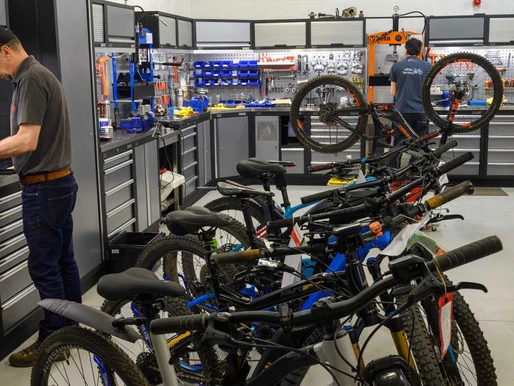
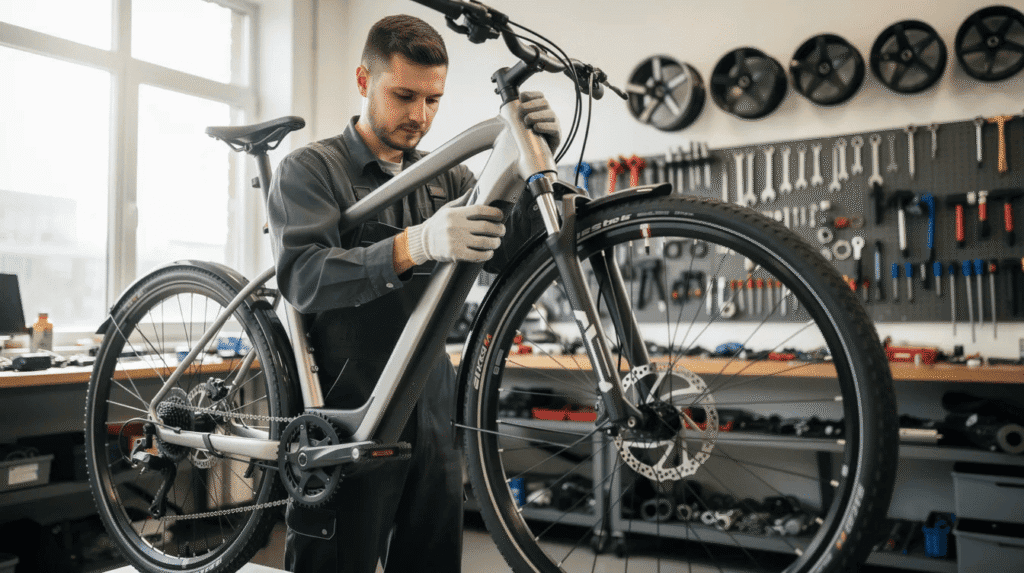
Crazy Lenny’s is a full-service repair shop, not just a sales floor. Our technicians service e bikes, perform tune-ups, install accessories, diagnose electrical issues, and help keep entry level models riding like new for years.
Why Local Expertise Matters More Than Specs on a Screen
Buying an electric bike from a local superstore is different from ordering an unknown box online.
Spec sheets can tell you motor wattage and battery size. They cannot tell you whether the bike feels stable at low speed, whether the throttle is too jumpy, whether the saddle works for your body, or whether the brakes feel right in your hands.
Here are a few reasons local help matters:
- You can test multiple models in one visit and compare power delivery, fit, brake feel, and handling.
- You can learn whether a rear hub motor, mid drive motor, or powerful mid drive motor makes sense for your route.
- You can ask about Madison hills, winter storage, salt, racks, tires, rentals, and local rules.
- You avoid being stuck with a bike that no local shop wants to repair.
- You can use Crazy Lenny’s eBike Finder questionnaire to narrow options by height, terrain, budget, and riding goals.
- You can ask about student discounts, Crazy Deals, closeouts, demos, and rentals before committing.
For many beginners, the best electric choice is not the most powerful bike. It is the bike that fits, stops safely, rides comfortably, and has support after the sale.
Beginner E-Bike Q&A: Quick Answers Before You Visit the Shop
These are the questions new riders ask most often at Crazy Lenny’s. The examples below are based on typical 2026 entry level electric bikes, but the best answer always depends on your height, weight, route, and riding goals.
Do I need to be “bike fit” before I buy my first e-bike?
No. Electric assist makes it much easier for beginners and returning riders to rebuild fitness gradually without worrying as much about hills, wind, or distance.
Many Crazy Lenny’s customers in their 50s, 60s, and 70s start with little recent cycling experience and do very well on step-through commuters, cruisers, and eTrikes. Start with low pedal assist levels and keep your first rides short, around 20–40 minutes, while you learn acceleration, braking, and cornering.
If you have joint, back, balance, or mobility concerns, staff can recommend frame styles and fit changes that make riding more comfortable.
How often will I really need to charge the battery?
Many new riders commuting 5–10 miles per day charge every 2–3 rides. Riders using high assist, hauling cargo, climbing hills, or riding in cold weather may charge daily.
Watch the display, learn how your bike uses power, and try to finish early rides with at least 20–30% battery remaining. Most modern lithium-ion packs are designed for hundreds of full charge cycles when treated properly.
Crazy Lenny’s technicians can show you how to remove, charge, store, and reinstall the battery safely at home or at work.
Can I ride my e-bike in rain or Wisconsin winters?
Yes, quality electric bikes are generally built to handle light rain and wet roads. They should not be submerged, pressure-washed, or left outside uncovered for long periods.
In winter, expect reduced range in freezing temperatures. Keep the battery warm when parked, store indoors when possible, and wipe salt from the frame, drivetrain, and wheels after winter rides.
Crazy Lenny’s carries fenders, brighter lights, winter-ready tires, and accessories for riders who want year-round transportation.
What accessories should beginners buy on day one?
Start with a quality helmet, front and rear lights, and a strong lock. Even if your bike includes integrated lights, extra visibility is useful for commuting and low-light riding.
Next, consider a rear rack and panniers for commuting, a more supportive saddle if needed, a mirror, and a kickstand if the bike does not include one. If you plan to transport the bike by car, make sure your bike rack is rated for e-bike weight.
Crazy Lenny’s can install accessories at purchase so your electric bike is ready for commuting, recreation, or cargo use from the first ride.
Is a fat tire e-bike too heavy for a beginner?
Not necessarily. Fat tire electric bikes are heavier, but the motor mostly cancels that drawback once you are moving. The extra traction and stability can make nervous beginners feel more secure.
The bigger concern is lifting. If you need to carry the bike upstairs, load it into a vehicle, or place it on a rack, weight matters. Apartment dwellers or riders who must carry their bike often may prefer mid-width commuter tires, a folding e bike, or a lighter folding electric bike instead.
The best way to know is to test different tire sizes back-to-back. Visit Crazy Lenny’s eBikes in Madison, WI for a free consultation, rental day, or test ride, and let our team help you find the best ebike for beginners based on your real riding style.